
Last updated November 21, 2026
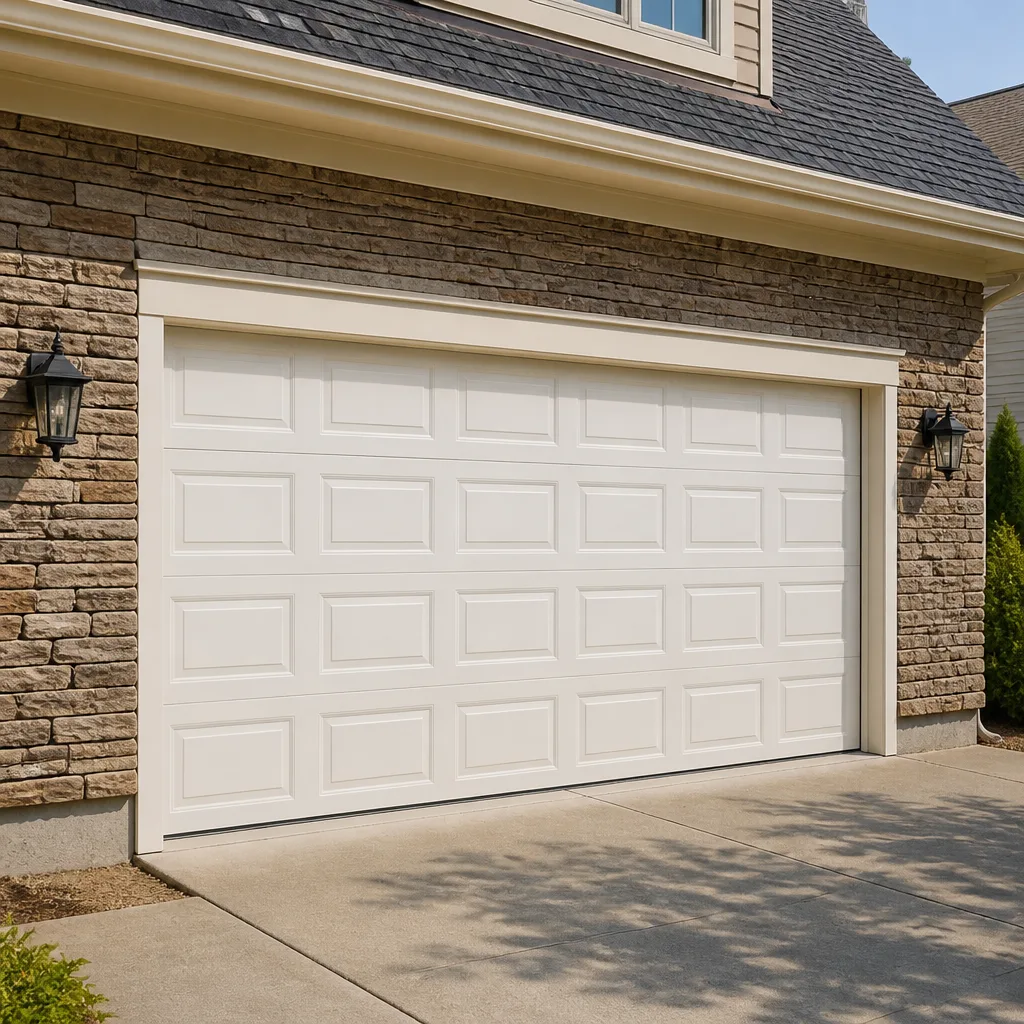 Raised-panel steel
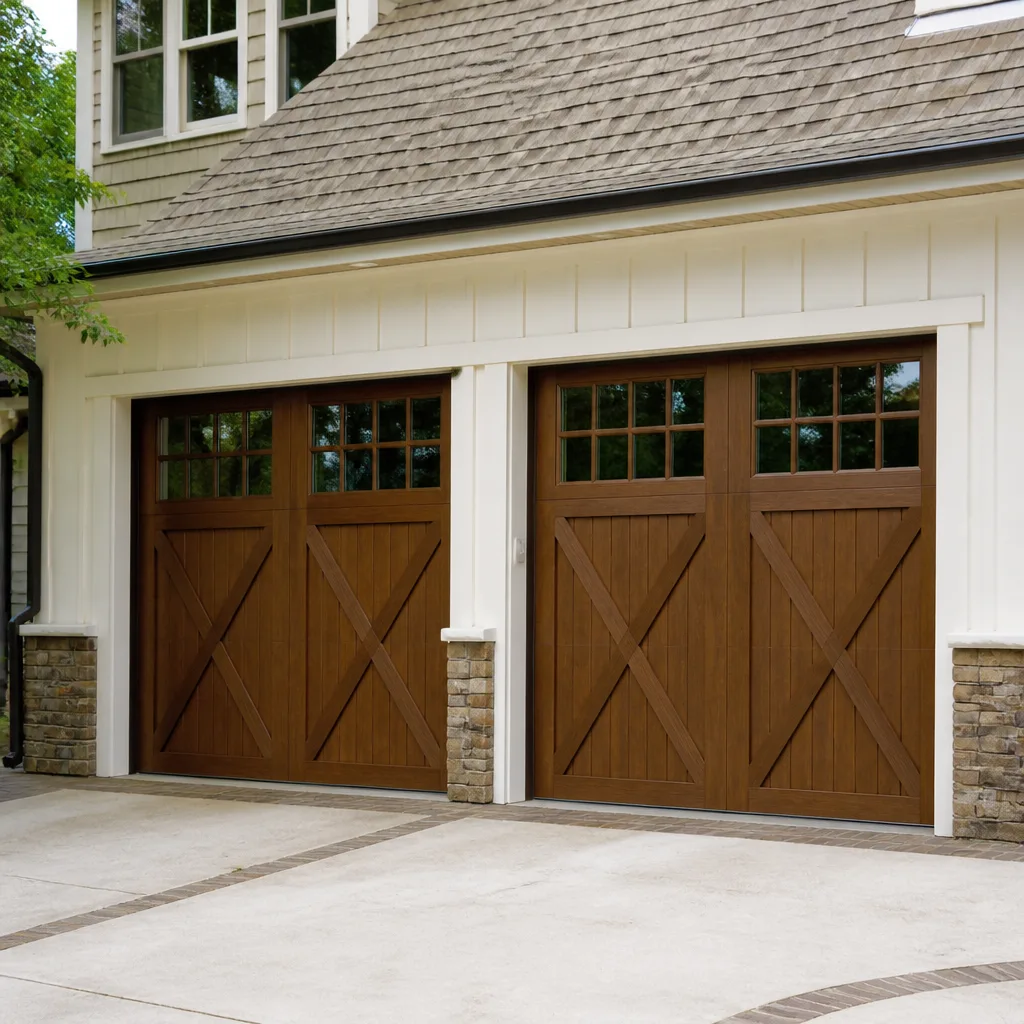 Carriage house
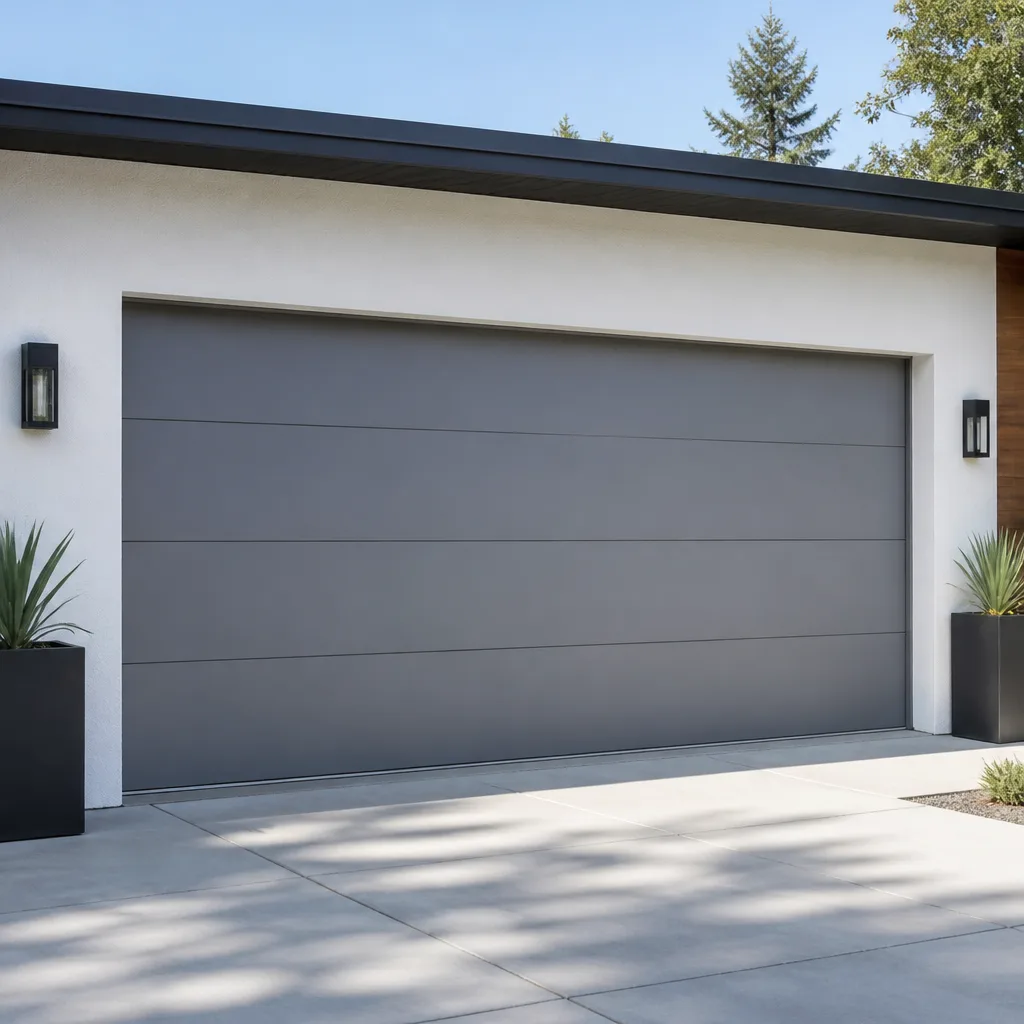 Modern flush
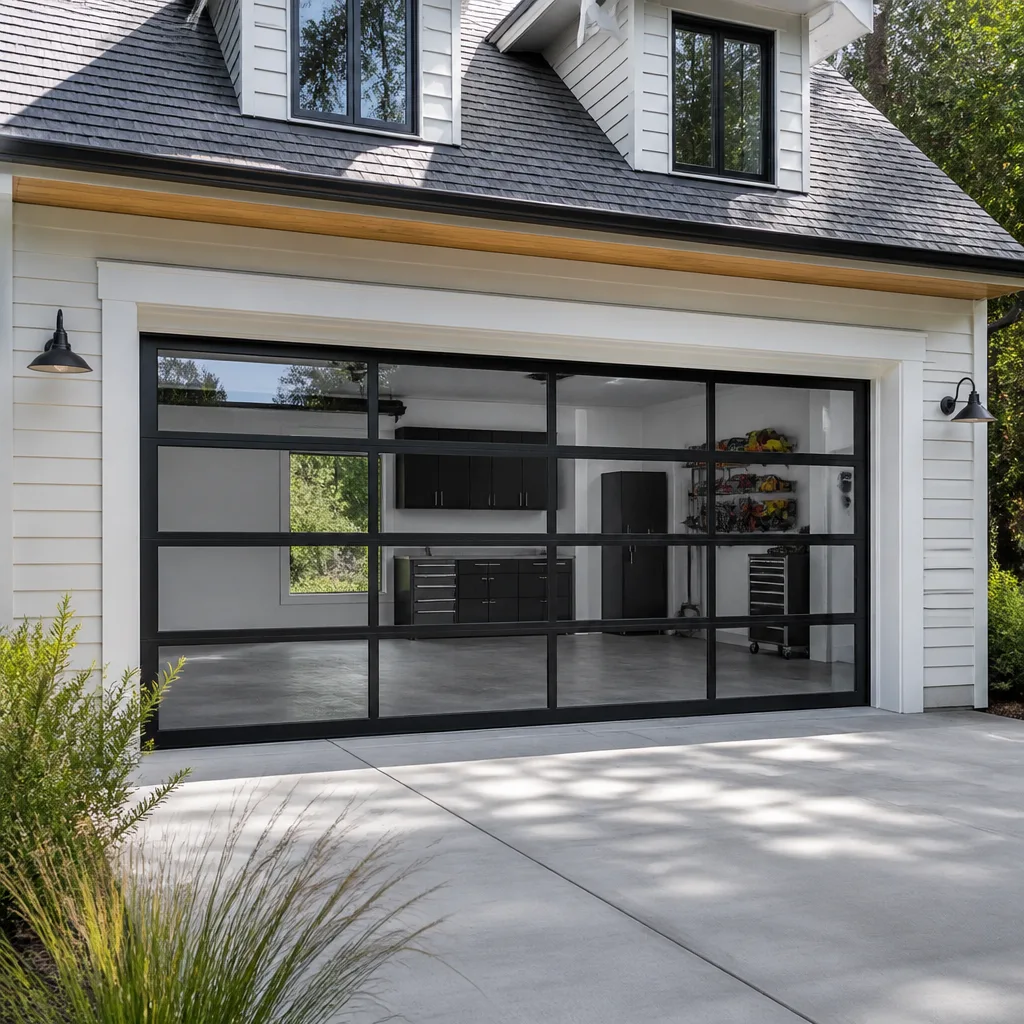 Full-view glass
 LiftMaster openers
 Chamberlain openers
Full 25-point door and opener safety check with every visit - springs, cables, rollers, tracks, and your LiftMaster or Chamberlain opener included
You get a price before we start. It does not change when the pro arrives.
Get your free estimateGarage Door Warning Signs: A Concourse Homeowner’s Reference Guide
Most warning-sign guides describe end-stage failures. A door that won’t open is obvious. The signals that actually matter are the quiet ones homeowners dismiss as normal: a door that opens a beat slower than it did last year, a roller that sounds slightly rough, an opener that skips once a month. Those aren’t quirks. They’re early symptoms of spring tension loss, cable wear, and bearing failure, and each one has a predictable timeline before the repair gets more expensive. This guide walks through the early signals we look for on Concourse doors, translates each one into what it actually means, and tells you when to act.
Quick Answer
The most reliable early warning signs of garage door failure are a door that runs slower than it used to, a door that reverses or stops partway without an obstruction, a roller that rumbles or squeals on the track, visible cable fraying at the drum, and a door that hesitates in cold weather but seems fine in summer. Any one of these means the system is out of adjustment or a component is wearing, and it’s worth a professional look before it becomes a stuck door. Call (844) 542-3280 for a free estimate in Concourse.
Styles & brands we work with
- Raised-panel steel
- Carriage house
- Modern flush
- Full-view glass
- LiftMaster openers
- Chamberlain openers
Table of Contents
- Why a Door That Runs Slower Is a Warning Sign You Can Measure
- The Visual Signature of a Cable About to Snap
- Why Intermittent Opener Failure Is Almost Never the Opener
- The Sound Profile of a Roller on Its Last 60 Days
- Warning Signs Specific to Cold-Weather Operation
- How Warning Signs Differ by Door Brand and Type in Concourse
- What to Check Each Season
- When to Act: Repair, Service, or Replace
Why a Door That Runs Slower Is a Warning Sign You Can Measure
A single-car garage door typically takes 12 to 15 seconds to travel from fully closed to fully open under normal operation. A double door takes roughly 18 to 22 seconds. If your door used to open in 13 seconds and now takes 15, that two-second difference is not “just getting old.” It’s a measurable loss of spring tension or added resistance in the rollers and track, and it gives you a timeline to work against.
Here’s how to turn “slow” into something useful:
- Time the full opening cycle with a stopwatch or phone timer, from first movement to full stop at the top.
- Write the time down. Repeat once that day and once a week for two weeks.
- Compare against the baseline ranges above. Within 2 seconds of baseline is normal drift. More than 3 seconds faster slow is worth a call.
- Watch for variation between cycles: a door that runs 14 seconds then 17, then 13, is binding in the track, not losing spring tension.
- Listen for the pitch of the motor changing mid-travel. A rising whine means the operator is working harder than it should.
What we’ve seen in Concourse is that most doors that show up as slow are still functioning. The homeowners who call at that stage spend less on the repair than the ones who wait for a full stall.
The Visual Signature of a Cable About to Snap
A cable that is fine and a cable about to snap look very different when you know where to look. The cable runs from the bottom corner bracket up the side of the door and wraps around the cable drum above. Normal wear shows as a light fray at the very bottom loop near the bracket. Failure signature shows as separation or flattening higher up, at the drum, or a visible kink in the cable travel. If you see either of those higher signs, stop operating the door.
The distinctions we look for:
- Fray at the bottom bracket only: normal wear, monitor monthly.
- Kink or birdcage anywhere along the cable: the cable has been stressed beyond its limit, replace both sides.
- Uneven wrap around the drum: the cable is off its groove, meaning the door is running out of alignment.
- Visible slack: the spring has lost tension and the cable is loose, which is the classic precursor to a snap.
- Rust-colored streaks on the steel cable: moisture has been in the door for a while, and the inner strands may already be compromised.
A cable under tension is dangerous work. Do not attempt to cut, adjust, or re-wrap a cable yourself. Spring repair is safety work, and we treat it that way: on this system, the high tension held in the springs and cables is enough to cause serious injury if handled without the right tools and technique. Call a trained technician.
Why Intermittent Opener Failure Is Almost Never the Opener
An opener that “sometimes” fails to respond is failing because something else is telling it not to move. In our experience, an intermittent LiftMaster or Chamberlain unit that occasionally refuses to close, or opens halfway then reverses, is reacting to one of four things: a binding door, a misaligned safety sensor, a worn drive gear, or a signal issue with the wall-mounted control. The opener itself is usually doing its job.
Here’s the diagnostic order we follow on a Concourse opener call:
- Disconnect the opener (pull the emergency release) and run the door by hand. If it feels heavy or binds, the issue is mechanical, not the opener.
- Check the safety sensor eyes at the bottom of the tracks. Dust, spider webs, and misalignment are the most common cause of “won’t close.”
- Check the wall button and remote separately. If the wall button works and the remote doesn’t, the opener is fine.
- Listen for the motor running without the chain or belt moving. That’s a stripped gear in the opener itself, not the door.
- Only then do we check the opener logic board.
We work on the opener systems actually installed in Concourse homes: LiftMaster, Chamberlain, Genie, Craftsman. garage door opener repair is a specialized service for us, not something tacked onto a door repair call. From the opener to the panel, we look at the whole system, not just the part making the noise.
The Sound Profile of a Roller on Its Last 60 Days
Rollers give you a sound-based countdown if you know the difference. A roller that needs lubrication squeaks. A roller that’s failing grinds or rumbles. A roller that has maybe 60 days left before it seizes or loses its ball bearings makes a rhythmic thumping or clicking sound that speeds up with the door and is easiest to hear when the door is moving through the middle of its travel.
What to listen for:
- Squeak, high pitch, on every cycle: dry roller, lubricate it.
- Grind, low pitch, constant: bearing wear, replace the roller.
- Thump or click per revolution: the roller is flat-spotted or the shaft is bent, replace soon.
- Rumble through the whole travel: multiple rollers are failing at once, usually because they’re the same age and installed together.
- Sound that disappears in warm weather and returns in cold: the rollers and the track are both worn, and the gap is opening up.
Rollers are one of the cheapest parts on the door and one of the most ignored. In Concourse, a door with aging steel rollers on a track that runs under a door frame tends to run at higher noise levels because the sound reflects off the frame rather than dissipating. If your door sounds much louder than your neighbor’s on the same style of house, look at the rollers first.
Warning Signs Specific to Cold-Weather Operation
The most dangerous symptom is the one that only shows up in cold weather. A door that hesitates, reverses, or stalls in January but runs normally in July is telling you the spring has lost reserve tension. The spring itself is still within its working range in warm conditions, but the extra load of cold-stiffened steel and metal contraction on the track pushes it past the limit. That door is going to fail; the only question is whether it happens on a cold morning or a hot afternoon.
Watch for these cold-weather-specific signs:
- The door opens fully in summer but stops halfway in the cold. Spring tension is on the edge.
- The opener strains on cold starts. The operator is compensating for added resistance from stiffness in the door and rollers.
- Loud cracking or popping on the first cold morning. The spring is stressed and the coils are sticking.
- The door feels noticeably heavier when lifted by hand in the cold than in summer. Something in the balance is off.
- The door reverses when it touches the ground in cold weather but not in warm weather. The open limit is set too tight, and cold changes the travel distance.
If a door fails on a Saturday in the cold, we’re closed that day, so the thing to do is call and we’ll book you into Sunday. We answer 24/7, with fast dispatch from 7am to 7pm, Sunday through Friday.
How Warning Signs Differ by Door Brand and Type in Concourse
Not every door brand gives you the same warning signs. We work on eight of the most widely installed door and opener brands in North America, and the differences show up in what a homeowner should watch for:
- Amarr doors: watch for panel bowing along the strut line, which loads the springs harder than on other designs and accelerates tension loss.
- Wayne Dalton doors: watch the track bracket bolts. Their track design uses a different bracket setup, and loose brackets produce a “pop” that reads as an opener issue.
- Craftsman openers: watch for drive chain slack. Older Craftsman chains stretch faster than belt drive, and slack shows up as a hesitation in the first inch of travel.
- Raynor doors: watch for section-joint loosening on the hinge fasteners, which produces rattle during travel and changes the sound profile of the whole door.
If you know your brand, that helps us diagnose faster. If you don’t, we identify it on the call. We also handle Clopay and Genie systems regularly, so no matter what’s installed on your Concourse home, we can work on it, which is exactly why we’re not a one-brand shop.
What to Check Each Season
A short seasonal check catches most warning signs before they escalate. Do this at the start of spring and at the start of fall. Concourse doors go through a real temperature swing between seasons, and the transitions are when the small issues become the big ones.
- Run the door by hand with the opener disconnected and note if it feels balanced or heavy.
- Look at the cables running from the bottom brackets to the drums. Fray, kink, or slack anywhere along the run is a stop signal.
- Listen for grinding or thumping in the rollers. Lubricate if it’s just squeaking.
- Check the safety sensor alignment (a straight line across the door, lights solid on both units).
- Walk the full perimeter of the track for loose bracket bolts and bent sections.
- Time the opening cycle against your baseline from six months ago.
If the door fails any one of these checks, that’s your trigger to schedule a service call. If you want to skip the seasonal ritual and just have someone check it for you, garage door repair service includes a full inspection, and the estimate is free.
When to Act: Repair, Service, or Replace
Any single warning sign usually means a repair, not a replacement. A door with one warning sign is a service call. A door with three or more is usually a sign the whole system is aging and worth a straight assessment of the cost of repair versus the cost of installation.
Here’s how we think about it:
- One warning sign, door under 10 years old: repair. Springs, rollers, cables, opener gear; no reason to replace.
- Two warning signs, door 10 to 15 years old: repair and service on the affected components.
- Three or more warning signs together, or a door that has had repeat repairs: worth a straight conversation about replacement.
- Structural damage (bent track, cracked section, spring broken on both sides): we assess whether the door can be safely brought back into service before we discuss options.
- Opener failing at a similar rate to the door: consider replacing the opener with the door rather than patching an aging system piece by piece.
We’re upfront that most doors we see in Concourse don’t need to be replaced. Same door, fixed right, is usually the right answer. If the repair and the replacement are close in cost, we tell you that too. garage door installation is a service we offer when it makes sense, not a default recommendation.
Common Mistakes to Avoid
- Calling a slower door “just old.” A two-second change in travel time is a symptom. Measure it, don’t shrug it off.
- Lubricating a grinding roller instead of replacing it. Grease quiets a squeak, but it does nothing for a worn bearing, and it puts off the replacement you’ll need anyway.
- Assuming the opener is failing when the door is actually binding. Pull the release and run the door by hand; that’s the 30-second test that saves you a new opener.
- Trying to adjust spring tension yourself. This is high-tension work, and the risk is serious injury. Springs and cables are not a homeowner adjustment.
- Ignoring a cold-weather-only symptom because it disappeared in summer. If the door hesitates in the cold, it’s already failing; the summer is the reprieve, not the proof.
- Waiting until the cable snaps to look at it. The visual checks in this guide take under two minutes. A cable about to fail is usually visible days or weeks before it does.
- Calling a generalist handyman for spring work. Spring repair is safety work; get a technician who does it as a dedicated service.
See the difference
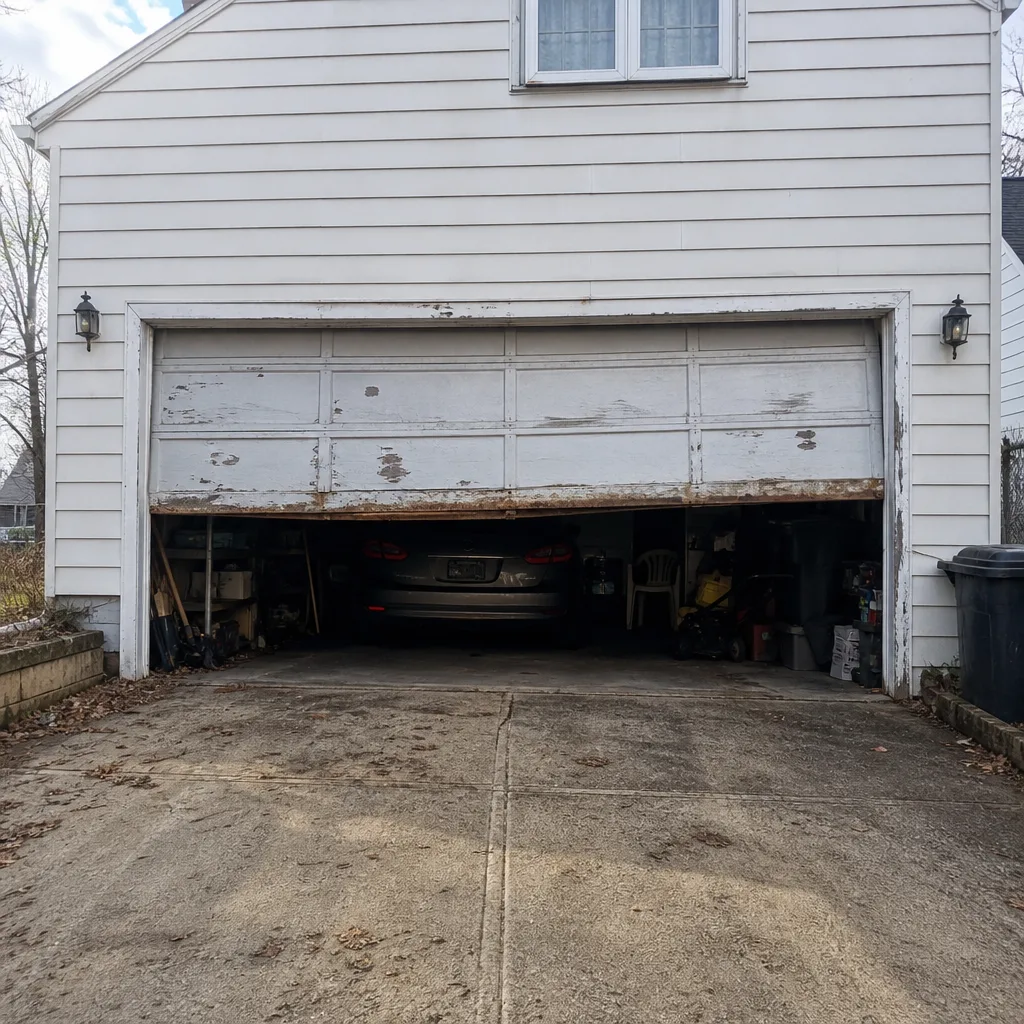 Before
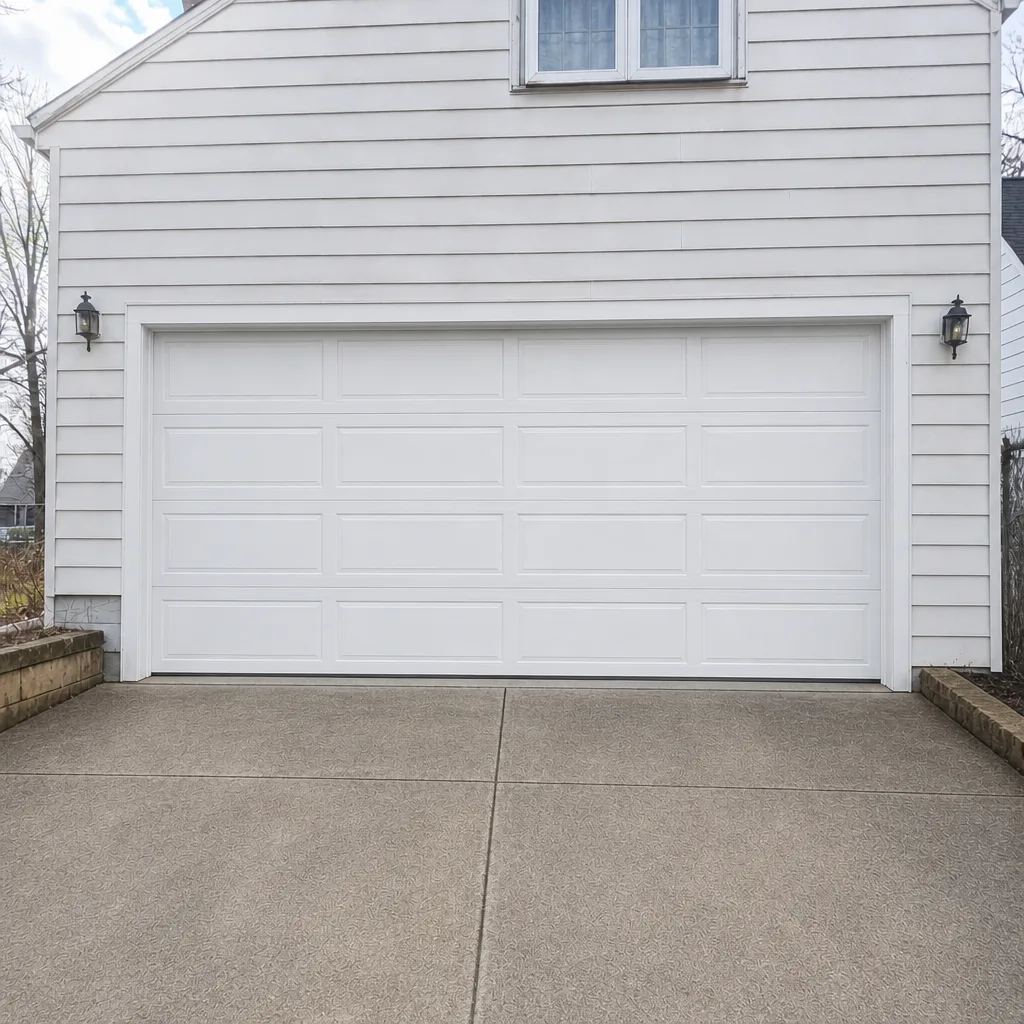 After
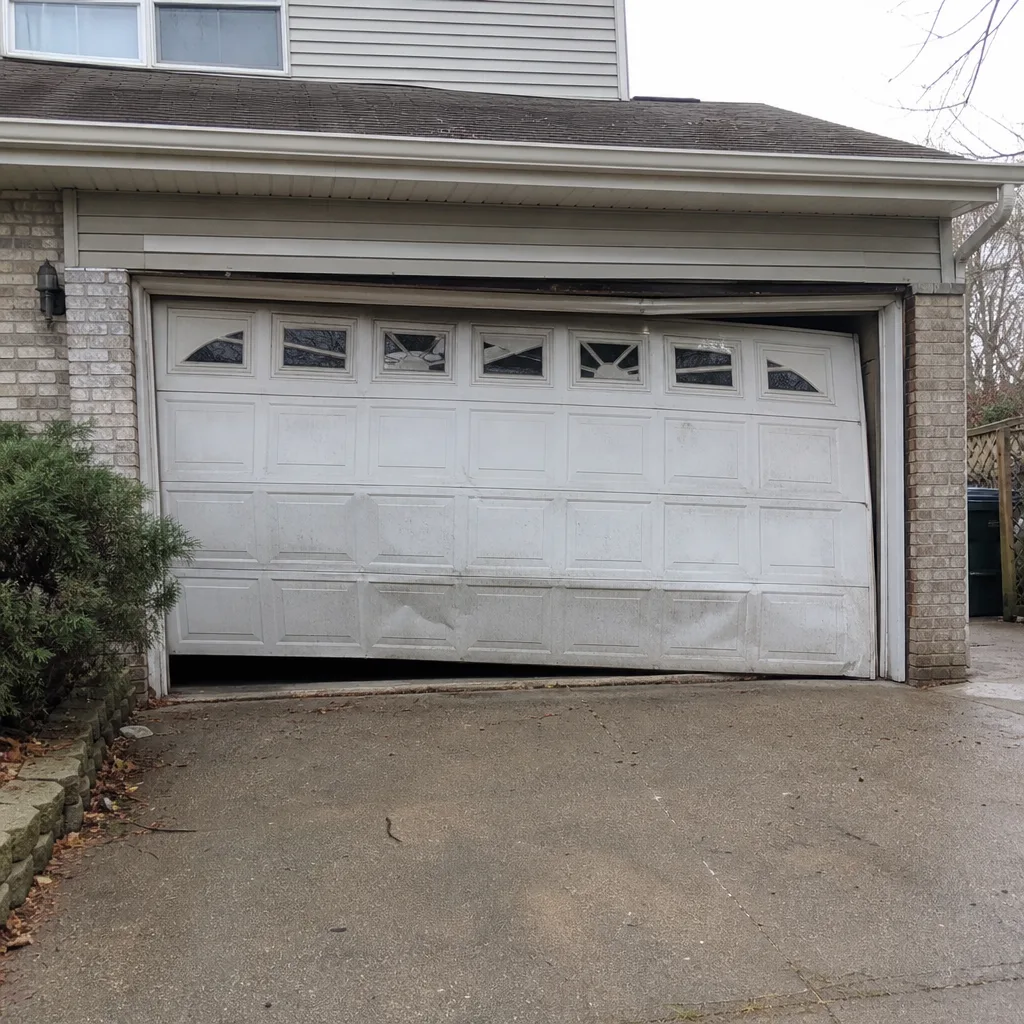 Before
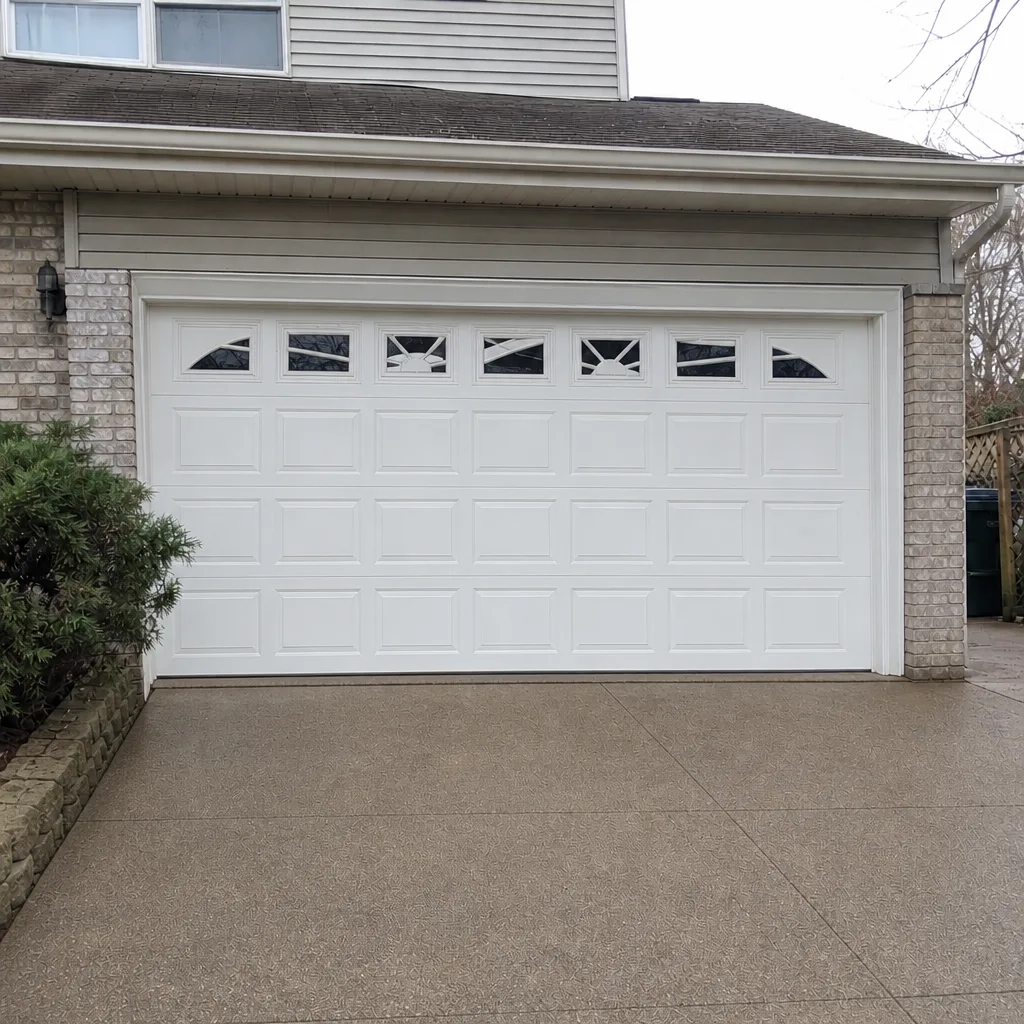 After
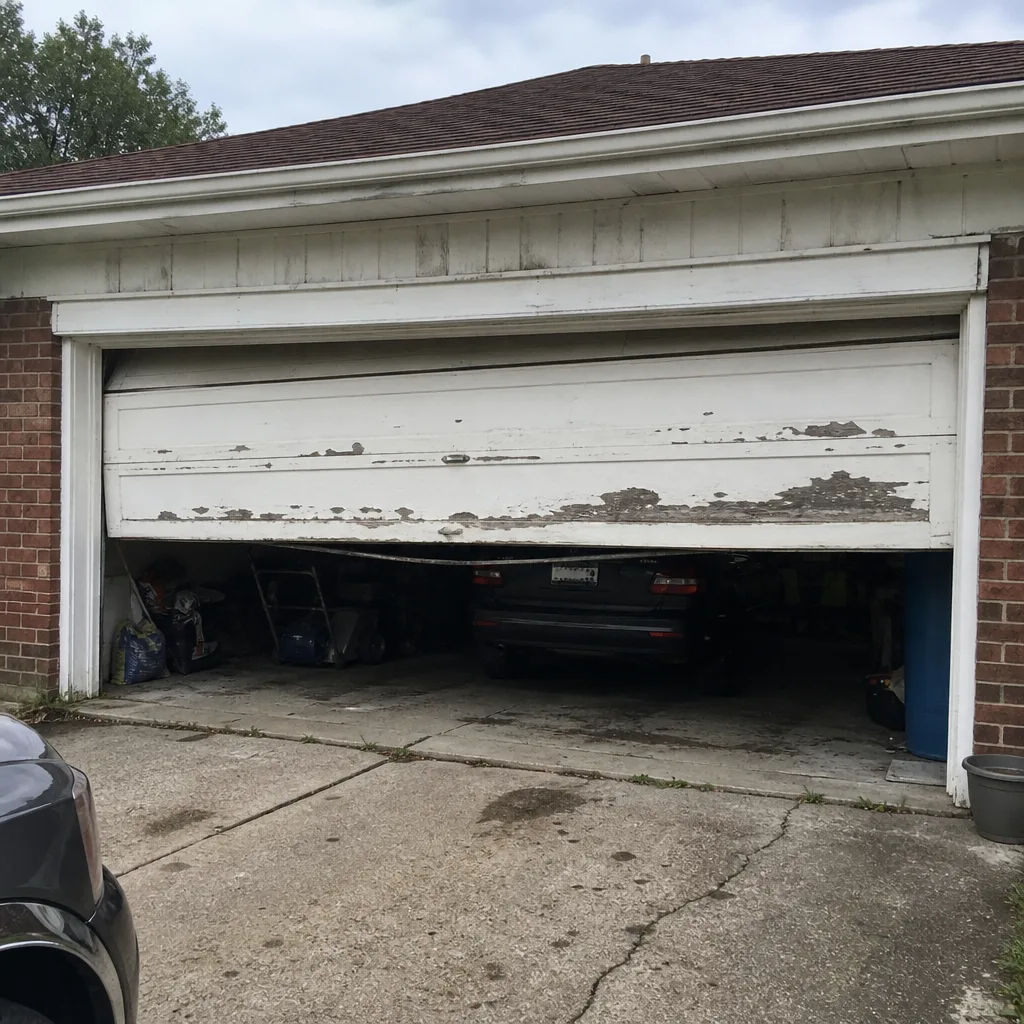 Before
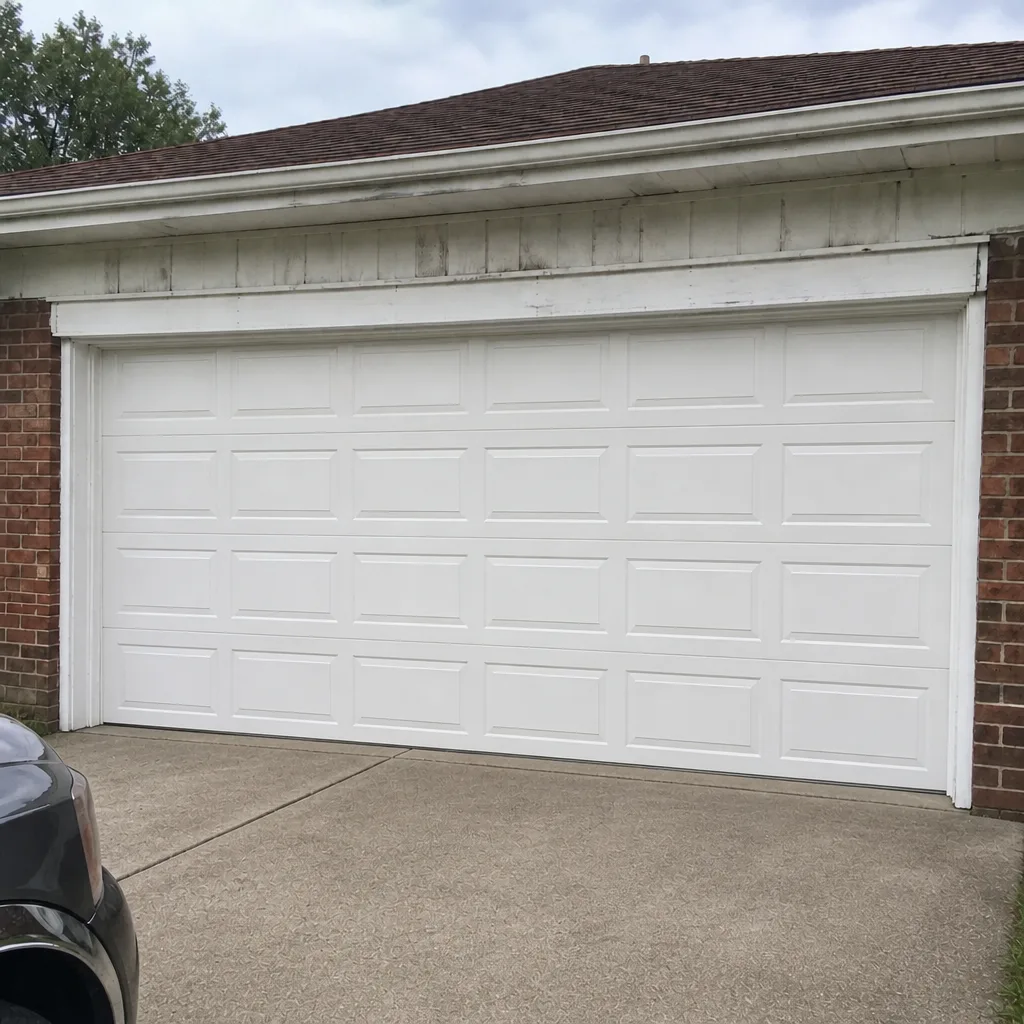 After
When to Call a Professional
Call a professional for anything involving springs, cables, or the opener logic board. Call same-day if your door is stuck open (security exposure), stuck closed (vehicle trapped), making a loud crack or bang, or reversing on its own without an obstruction. Call for a routine inspection if you’ve counted two or more of the warning signs in this guide, if your door is over 10 years old and has never been serviced, or if a cold-weather symptom has started showing up every year. Garage Door Repair Concourse offers free estimates in Concourse; call (844) 542-3280. We answer 24/7. Fast dispatch from 7am to 7pm, Sunday through Friday.
Frequently Asked Questions
The first warning sign is usually a door that runs slower than it used to. A single door should open in about 12 to 15 seconds and a double door in about 18 to 22 seconds; if the timing has crept up by more than three seconds, spring tension or roller resistance is changing. Call (844) 542-3280 for a free estimate.
You can lubricate rollers and check sensor alignment yourself. You should not adjust springs, cables, or the torsion system; those are high-tension components and the risk of injury is serious. Call (844) 542-3280 and we’ll assess it; estimates are free.
Intermittent opener failure is usually a binding door, a misaligned safety sensor, or a stretched drive chain, not a failing opener. The way to tell is to disconnect the opener and run the door by hand; if it binds, the door is the issue. Call (844) 542-3280 for a diagnostic visit.
Yes. Cold-only symptoms mean the spring has lost reserve tension and is working past its limit in the cold. That’s a failing spring, not a quirk. Call (844) 542-3280 before the door gets stuck; the estimate is free.
We’re closed Saturday. We’re open Sunday through Friday, 7am to 7pm. We answer 24/7, and a call outside dispatch hours is booked into the next opening, Sunday through Friday, 7am to 7pm. Call (844) 542-3280.
The estimate is free. The price of any work is set per job by the written estimate, quoted and agreed before the technician starts. Call (844) 542-3280 for a free estimate.
The Bottom Line
The warning signs that matter most are the ones that don’t look like failures yet. A slower door, a quiet thump in the roller, a cold-weather hesitation, a slight fray high on a cable: each one tells you what’s about to happen with enough lead time to act. Measure your door’s travel time against baseline, listen for the roller sound profile, and treat cold-only symptoms as a failing spring, because they are. Act on one sign and you avoid a stuck door. Act on three or more and you’re having a straight replacement conversation. Garage Door Repair Concourse works on the brand already installed on your door, repairs first when that’s the right call, and gives you a price in writing before any work starts. Call (844) 542-3280. We answer 24/7. Fast dispatch from 7am to 7pm, Sunday through Friday. Estimates are free.
Written by the team at Garage Door Repair Concourse.