
Last updated November 21, 2026
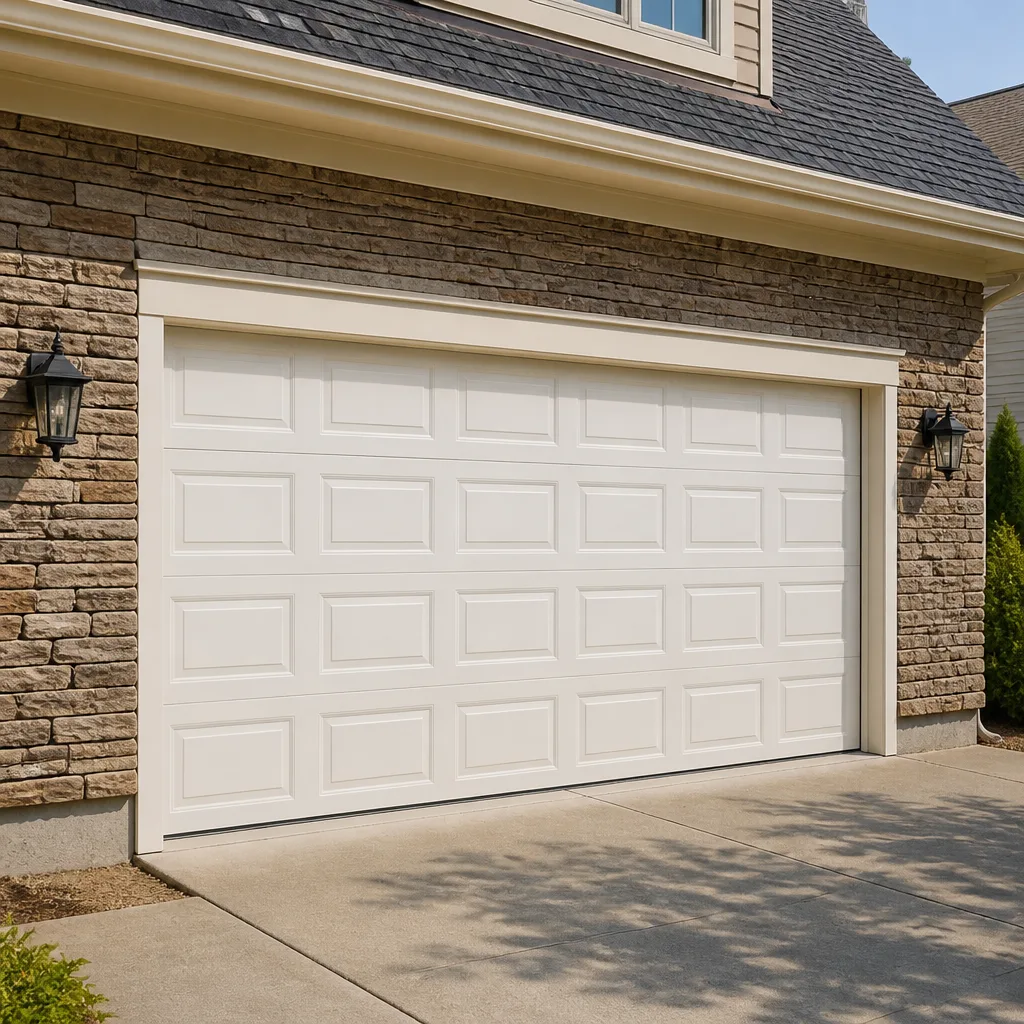 Raised-panel steel
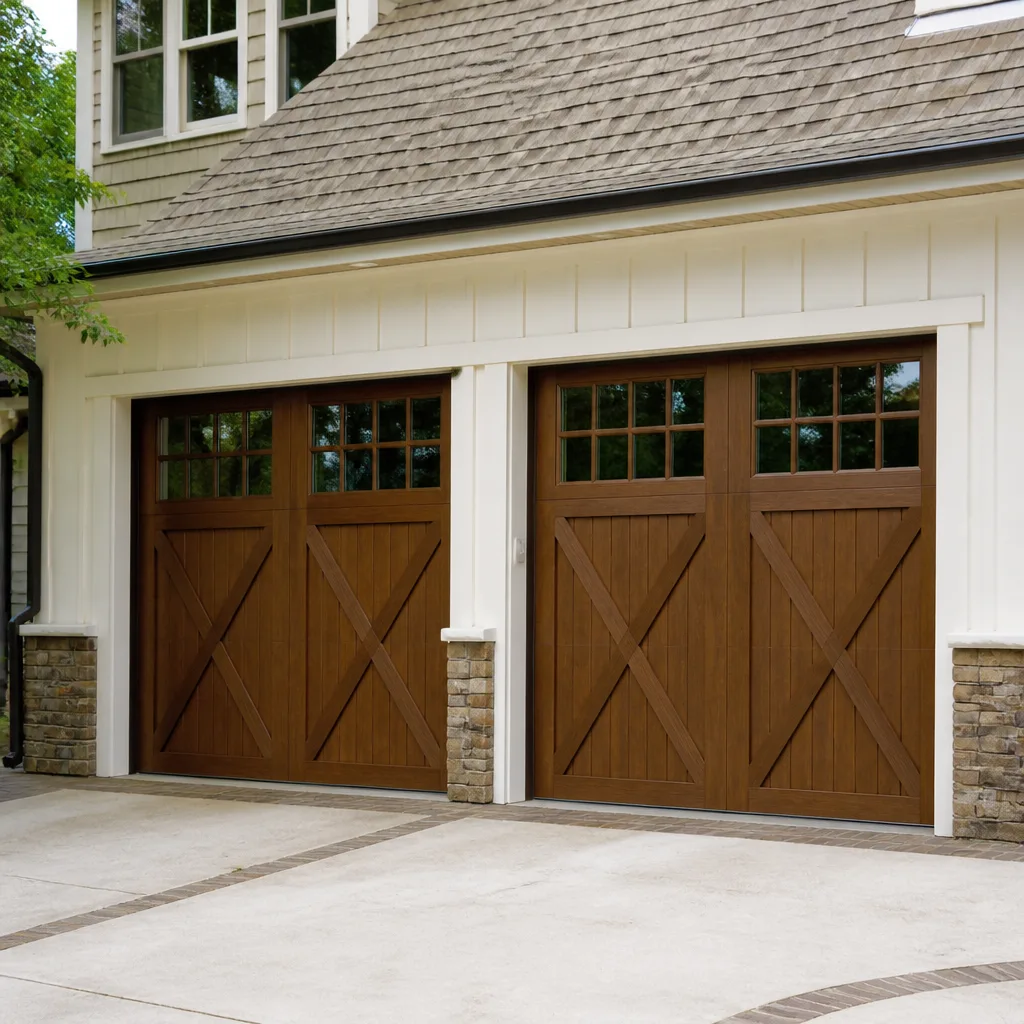 Carriage house
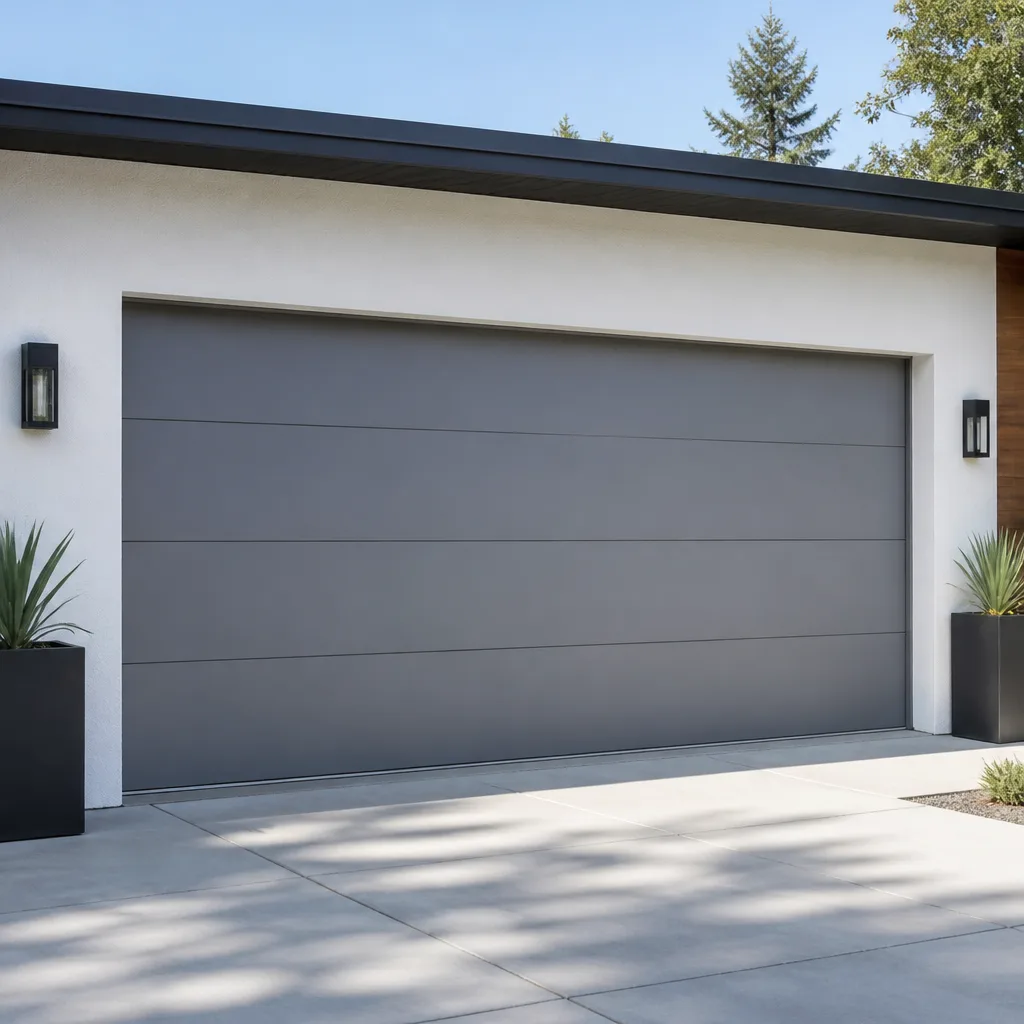 Modern flush
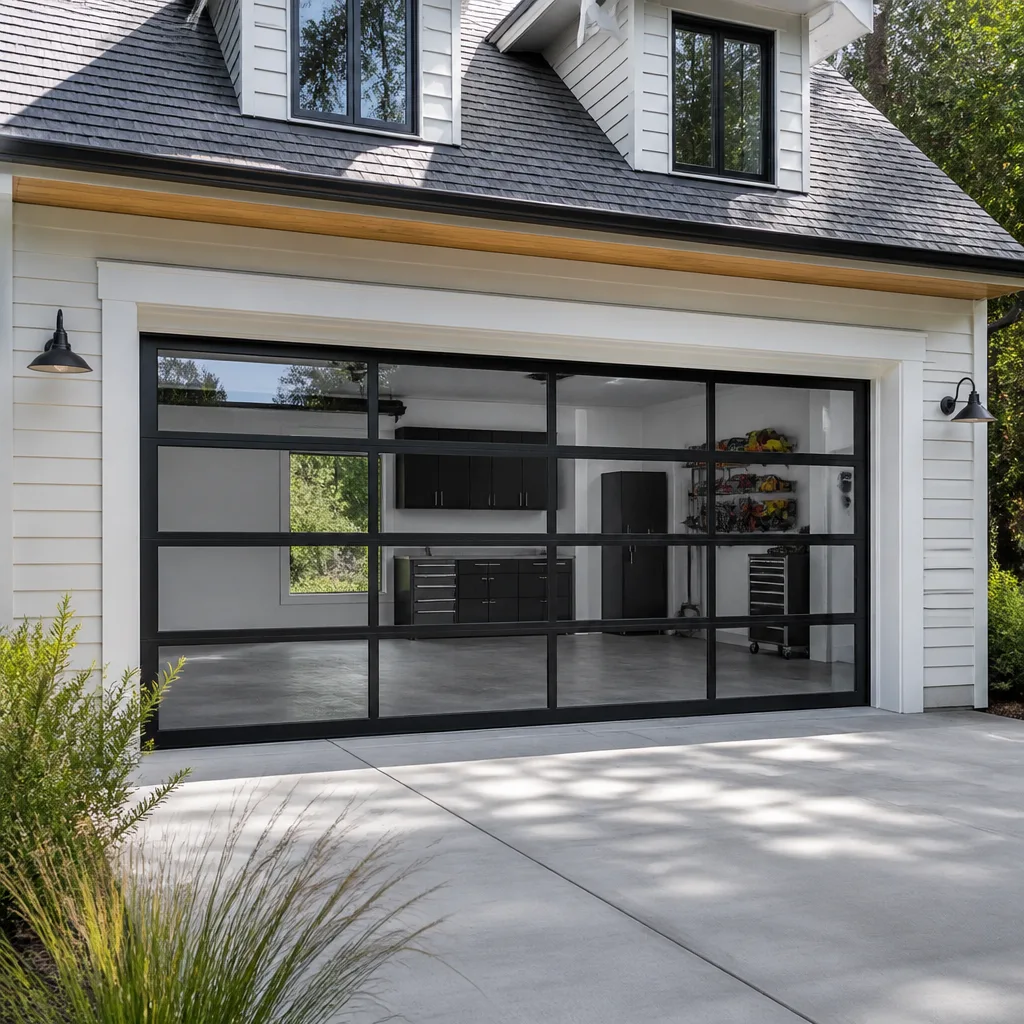 Full-view glass
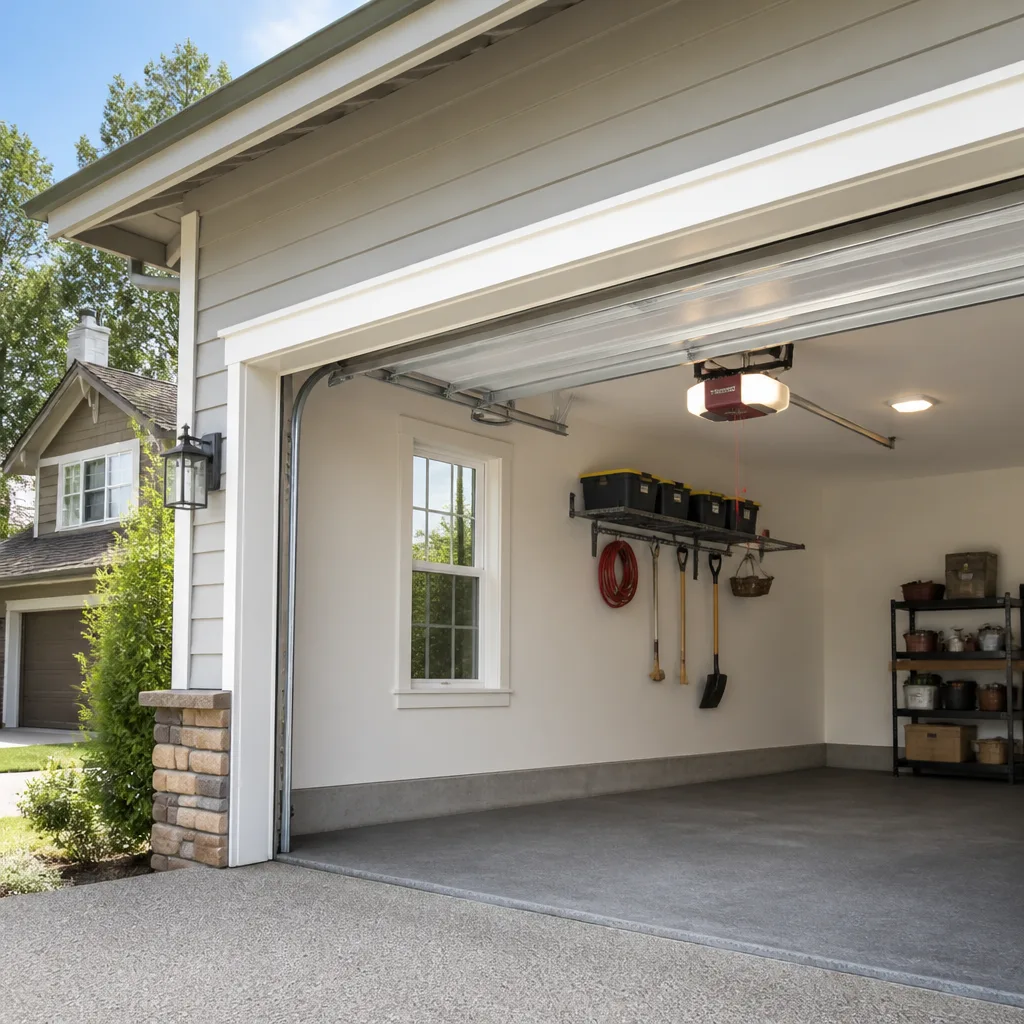 LiftMaster openers
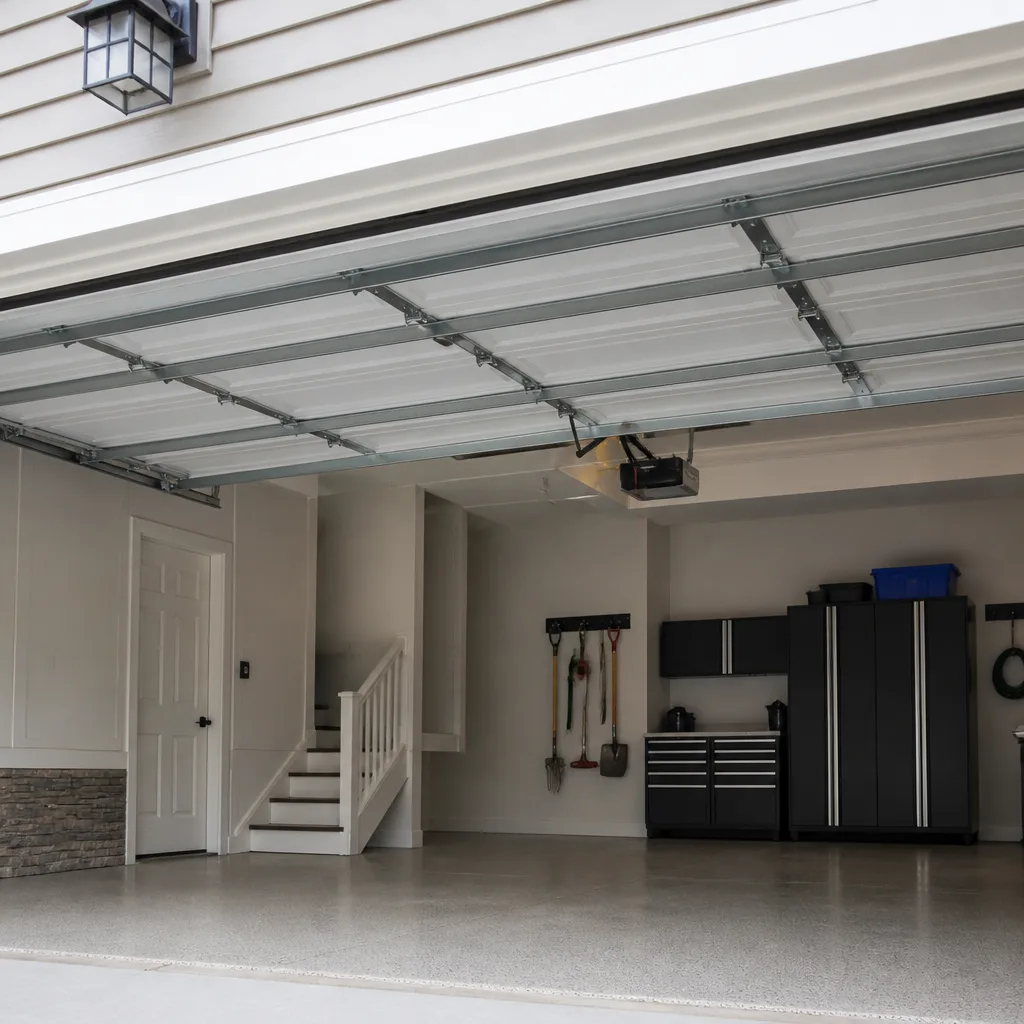 Chamberlain openers
Full 25-point door and opener safety check with every visit - springs, cables, rollers, tracks, and your LiftMaster or Chamberlain opener included
You get a price before we start. It does not change when the pro arrives.
Get your free estimateGarage Door Emergency Preparedness Guide for Concourse Homes
Most homeowners in Concourse think of their garage door as automatic, right up until the moment it isn’t. The counterintuitive truth is that a door which works every day can become a serious problem the instant a cable snaps, a spring breaks, or the power drops out during a storm. The opener gets all the credit, but the door, the springs, and the cables do the real work, and any one of them can fail without warning. What you know before that happens decides how calmly you handle it. This guide walks through how to stay safe, secure your home, and get the right help fast, using the exact steps we take when we respond to emergencies across Concourse.
Quick Answer
A garage door emergency in Concourse usually means one of two things: a mechanical failure that traps your car or leaves the door stuck open, or a power outage that turns a working door into dead weight. Prepare by finding your emergency release cord, learning how to disengage the carriage safely, and keeping a battery backup on your opener if you rely on your garage daily. If a spring or cable breaks, don’t try to lift the door yourself, keep people clear, and call for trained help. Our technicians have up to 14 years of experience with every major brand, and we can work with your system rather than pushing a replacement.
Styles & brands we work with
- Raised-panel steel
- Carriage house
- Modern flush
- Full-view glass
- LiftMaster openers
- Chamberlain openers
Table of Contents
- Why Garage Door Emergencies Are Different in Concourse
- What to Do During a Power Outage: Disengaging Your Opener Safely
- When a Cable Snaps and the Door Is Stuck Open
- Securing a Door With a Broken Spring in the Up Position
- Information to Have Ready Before You Call
- Battery Backup Openers and NYC’s Cold and Humidity
- Preventive Checks You Can Do in Five Minutes
- Common Mistakes to Avoid
Why Garage Door Emergencies Are Different in Concourse
An attached garage on a Concourse block is not a detached outbuilding at the edge of a big yard. It’s part of the house, tucked under or beside living space, and connected to a driveway that’s often narrow and shared with a neighbor. That changes what an emergency actually costs you. A door stuck open exposes the interior of the garage to the street, and everything stored there with it. A door stuck closed traps the one vehicle that gets you to work, to school pickup, or to the store.
The housing stock in this part of the Bronx is largely attached homes and rowhouses, many with low-clearance garages. That means a free-falling door has very little room to swing before it hits a parked car or the ground, and the ceiling above is often too tight for an oversized door. When we get an emergency call here, the physical space of the job shapes how we approach it.
Weather is the other factor. Concourse summers are humid and hot, and winters bring hard freezes. Wood doors swell and stick in that damp air. Metal hinges and rollers groan when the cold sets in. An opener that ran smoothly in October can act up by January, which is why preparation here means thinking about seasonal swings, not just a single breakdown.
The costs of getting help stack up too. A missed day of work because the car is blocked, or a night of leaving the garage open, is real money and real risk. Emergency service exists for exactly these moments, and getting it right the first time is what our Garage Door Repair Concourse team focuses on. Read the rest of this guide before you need it, not after.
What to Do During a Power Outage: Disengaging Your Opener Safely
When the grid drops out, an electric opener is a paperweight until the power returns. If your opener has a battery backup, you may still be able to cycle the door a limited number of times. If it doesn’t, you need the manual release. That red cord with the handle hanging from the carriage is the whole system’s escape hatch, and most homeowners have never once pulled it.
Here’s the correct order of operations, whatever brand is on your ceiling, whether it’s a Chamberlain, a Genie, or a system that came with the house:
- Make sure the door is closed or fully open. Never pull the release cord with the door halfway up. The door is balanced by its springs, and a halfway door can drop or run once it’s disengaged.
- Stand clear of the door’s path. Keep children and pets back before you touch the cord.
- Pull the red handle straight down and toward the door. You’ll hear a click when the carriage releases the trolley. The door is now on the tracks only.
- Lift the door by hand from the bottom center. If it feels far heavier than it should, stop. That weight is a sign of a spring or balance problem, not just a dead opener.
- Re-engage the carriage once power is back. With the door fully closed, pull the cord toward the opener to reconnect, then run the opener once to test the fit.
Two mistakes cause most of the damage we see after an outage. The first is pulling the cord while the door is mid-travel, which lets the door slam down or slam open. The second is forcing the carriage back into the trolley by hand and bending the track in the process. When the door won’t move, we move fast, but a little care before you pull saves a repair bill.
When a Cable Snaps and the Door Is Stuck Open
A snapped cable is loud and immediate. The door may lurch to one side, hang crooked, or stop partway up with one corner sagging. The cable is under heavy tension, and a door with a broken cable is no longer balanced, so it can jam, twist, or drop without warning. This is one of the calls we take most often, and it’s one where the right first move matters.
Your job in the first few minutes is not to fix the cable. It’s to secure the house and keep people away. For a door stuck open, work through these steps:
- Keep everyone away from the door. Don’t stand under it, don’t try to push it down, and don’t let anyone walk through the opening.
- Lock the interior entry door between the garage and the house, so the open garage isn’t a path into your home.
- Move valuables and tools out of sight if you can do it safely from the side, away from the door itself.
- Close the garage from the outside if you have a padlock or slide bolt on the exterior, and leave it that way until a technician arrives.
- Don’t cut or remove the broken cable. The remaining cable on the other side may still be under load, and touching either one is a serious injury risk.
Overnight is the hardest part. If the door can’t be secured from the outside, consider parking a vehicle close to the opening or asking a neighbor to keep an eye on the house. These are stopgaps, not repairs. Cable replacement is a trained technician’s job, and the technician who shows up needs to replace both cables on a matched pair, check the drums, and rebalance the door before it moves again.
Securing a Door With a Broken Spring in the Up Position
A broken spring often announces itself with a bang that sounds like a gunshot. Afterward, if the door happens to be in the up position, it stays there, but not safely. The springs are what counterbalance the door’s weight. Without them, the door is a heavy panel suspended above your car, and pulling the release cord or running the opener can bring it down hard.
Spring repair is safety work. Garage doors have high-tension springs and cables that store enough force to cause serious injury, and this is not a job for a general handyman or a weekend project. Our approach is to treat every spring call as a safety call first and a repair second. Here’s what to do while you wait:
- Stop using the opener immediately. Don’t run it again to “see if it works.” The opener is now pulling dead weight and will strain or burn out.
- Leave the door in the up position. Don’t try to close it by hand. A door without spring tension can fall fast and with little warning.
- Disconnect the opener from the door only if the manual says so safely with the door fully up. If you’re not sure, leave it engaged and let a technician handle it.
- Block the opening from below with something visible, like a sawhorse or a length of caution tape, so no one walks under the door.
- Call for spring repair. A trained technician will bring the correct spring for your door’s weight, and the written quote is agreed before any work starts.
If a door with a broken spring is stuck closed and your car is inside, resist the urge to force it. Forcing a door with a failed spring can bend the track or crack a panel, and it can also send the door down on you. Better to call and let the spring get replaced properly. That’s the difference between a repair and a replacement, and it’s a difference we work hard to keep on the repair side. If you need help today, our garage door repair team handles spring and cable calls across Concourse.
Information to Have Ready Before You Call
The faster you can give a technician the right details, the faster the right parts show up. If you call without them, the technician may need a second trip, which costs you time. Have this information ready before you pick up the phone:
- Opener brand and model. LiftMaster, Chamberlain, Genie, and Craftsman all have different carriage designs and safety sensors. Knowing which one you have helps us diagnose the issue before we arrive.
- Door manufacturer. If your door is a Clopay, Amarr, Wayne Dalton, or Raynor, the panels, hinges, and track dimensions differ, and some parts are specific to the line.
- Spring type and position. Torsion springs sit above the door on a shaft. Extension springs run along the sides. Knowing which you have tells the technician what to bring.
- Door weight or size. Width and height are a good start. If you know whether the door is insulated or single-panel, even better.
- A description of the failure. “The door is stuck open with a snapped cable on the left side” gets you help faster than “the door is broken.”
- Your address and access details. Narrow driveways, shared alleys, and low-clearance garages are common in Concourse, so mention if there’s a tight approach or a car parked in the way.
We answer 24/7, so you can call the moment it happens, even if it’s late. Fast dispatch from 7am to 7pm, Sunday through Friday. A call outside dispatch hours is booked into the next opening, Sunday through Friday, 7am to 7pm, so getting the info to us early means you’re on the schedule sooner. The written estimate sets the final price, and the price is agreed before any work starts.
Battery Backup Openers and NYC’s Cold and Humidity
Battery backup is the single best upgrade for a garage door you depend on. In a Concourse summer storm, the power can be out for hours, and a door that won’t open means a car that won’t move. A backup battery lets the opener cycle the door several times on its own power, which is enough to get out, get in, and wait out the outage.
Not every unit handles our weather the same way. Hang the opener in an unheated garage in Concourse and it sees summer humidity and winter freezes, year after year. In our experience, the batteries that hold up best are the ones the manufacturer sells for that specific opener, not a generic replacement. Older batteries lose capacity after a couple of seasons, and a backup that’s been forgotten on the wall is the same as no backup at all.
Here’s how to think about compatibility:
- Openers with an integrated battery are the simplest. The battery sits in the head unit, and you test it with the opener’s own test button or by checking the indicator light.
- Openers with an optional add-on pack need the right pack for the drive type. LiftMaster and Chamberlain models often accept a brand-specific backup unit, while some Genie models use a different format. Check the manual before buying.
- Old openers without a backup option are where the manual release becomes your plan A. Practice it once in daylight so you know where the cord is and how it feels to disengage the carriage.
If your opener is aging, a modern unit with a built-in battery can be a worthwhile replacement, and our garage door opener repair team can tell you whether yours can be retrofitted or needs replacing. We work across the major opener brands, so we can give you a straight answer about your specific system.
Preventive Checks You Can Do in Five Minutes
Most emergencies we get called for in Concourse announce themselves before the failure. A five-minute walk-around every few months catches the early signs. These are the checks a homeowner can safely do without tools and without touching high-tension parts:
- Listen for the opener. A healthy opener runs steady. Grinding, rattling, or a door that stutters usually means a worn roller, a loose chain, or a straining motor.
- Watch the door travel. If it moves unevenly or one side lags, the cables or springs may be out of balance.
- Check the rollers and hinges. Rust and wobble are common in a damp Concourse garage. Don’t soak the track, but a light manufacturer-approved lubricant on the rollers goes a long way.
- Test the safety sensors. Walk through the door’s path while it closes. A properly working sensor stops the door and sends it back up.
- Look over the springs and cables. You don’t need to touch them. A visible gap in a torsion spring or a frayed cable at the drum is a call to a technician.
- Test the manual release in daylight. With the door closed, pull the cord, disengage the carriage, and re-engage it. Practice makes the real thing less scary.
- Check your backup battery. If your opener has one, test it once a season so it’s ready before the next storm.
These checks don’t replace a professional service call, but they catch more problems than most homeowners realize. Doors on the older rowhouse stock in Concourse, especially wooden ones, tend to swell in the humid months and stick in the cold. A door that needs a shoulder to close in July is telling you something.
Common Mistakes to Avoid
In our experience, the damage from a garage door emergency is usually done in the first ten minutes, before a technician is called. Here are the mistakes we see most often in Concourse:
- Pulling the release cord with the door halfway up. The door is not balanced at that height, and disengaging it can let it drop suddenly. Always disengage with the door fully closed or fully up.
- Trying to replace a spring or cable yourself. Springs and cables are under heavy tension and can cause serious injury if they release unexpectedly. Spring repair is safety work, and it belongs with a trained technician.
- Running the opener after a spring breaks. The opener is now lifting dead weight, and it will strain or fail. Leave it off until the spring is replaced.
- Ignoring a door that’s stuck open. An open garage on an attached Concourse home is a direct path into the house. Lock the interior door and call for same-day help rather than leaving it open overnight.
- Forcing a stuck door. Pushing or pulling a jammed door can bend the track or crack a panel, turning a repair into a full replacement.
- Buying a generic battery for a battery-backup opener. The wrong battery may not fit or may fail early in a cold Concourse garage. Use the manufacturer’s replacement.
- Calling a general handyman for a mechanical failure. A handyman may mean well, but an opener and door system from Clopay, Amarr, LiftMaster, or any other major brand needs a technician who knows that equipment. Choosing the right technician now saves a second call later.
See the difference
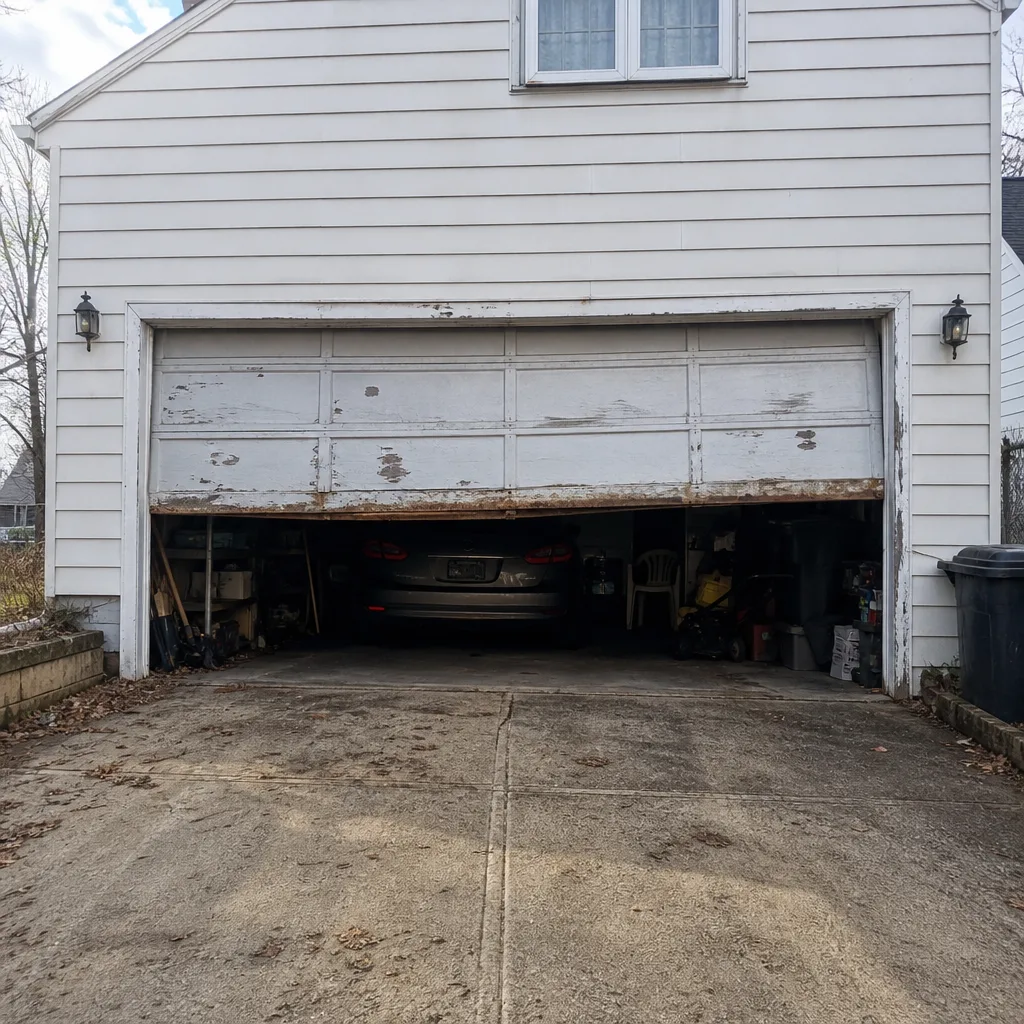 Before
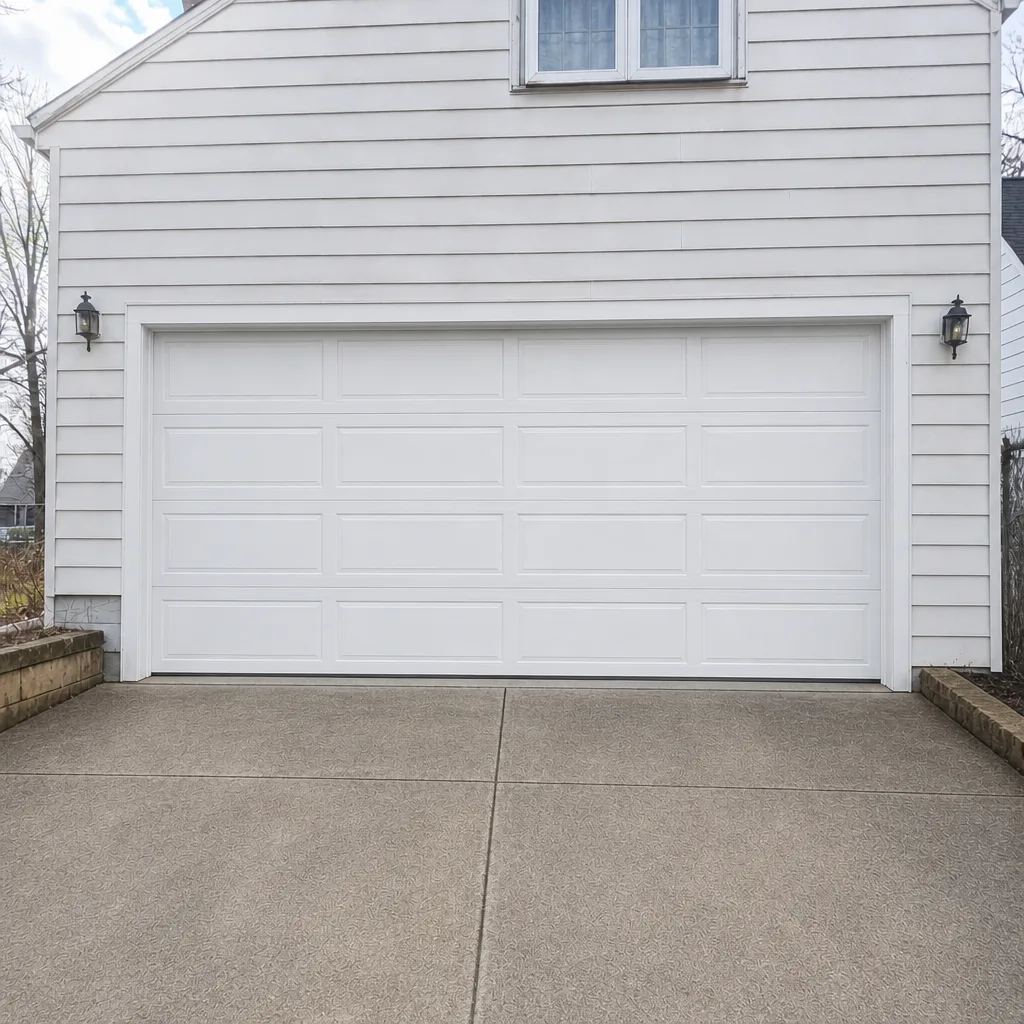 After
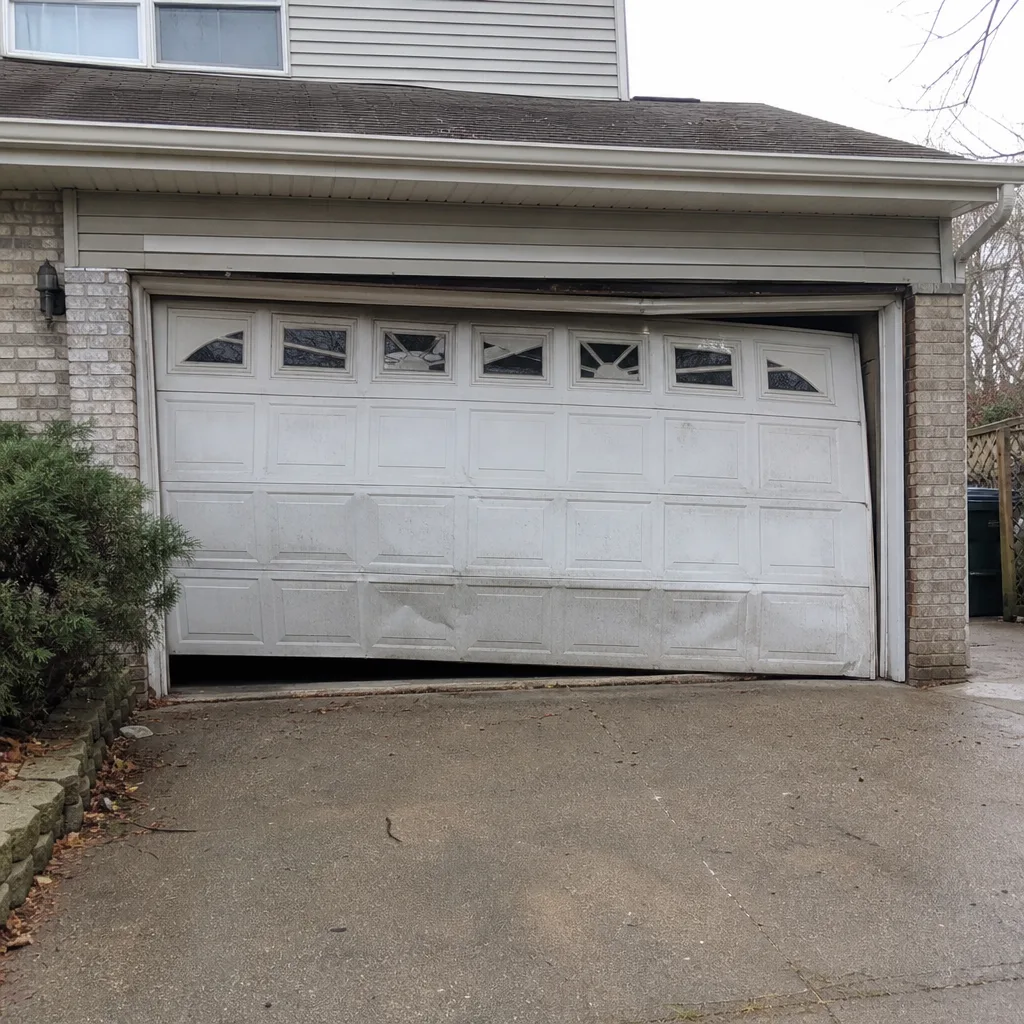 Before
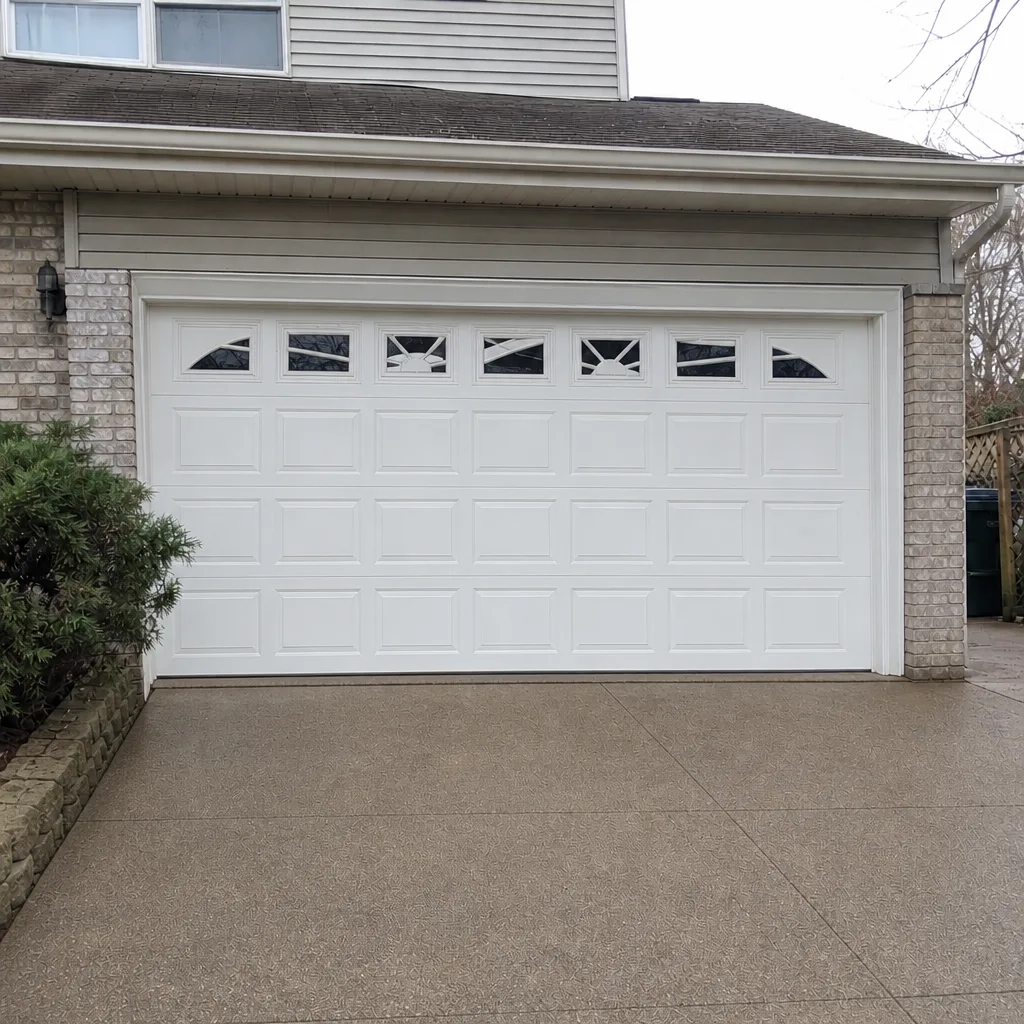 After
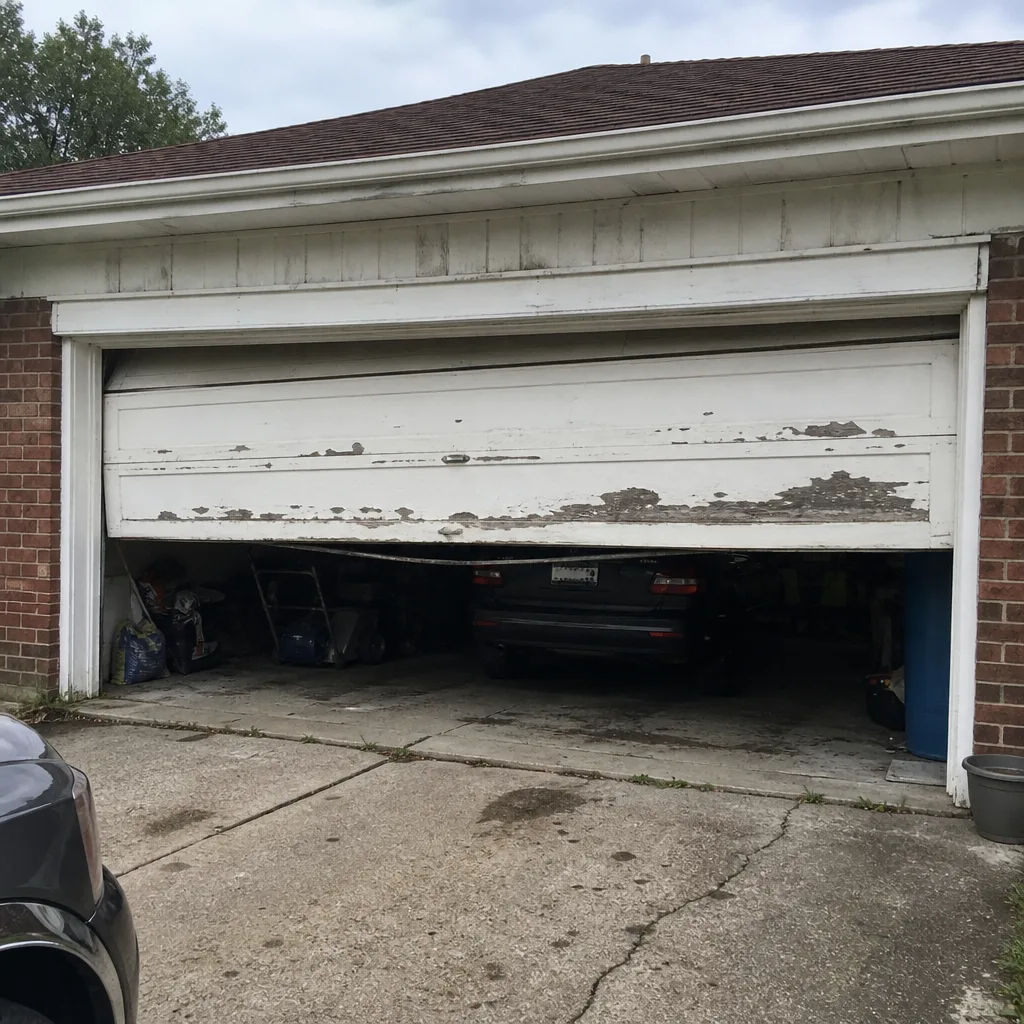 Before
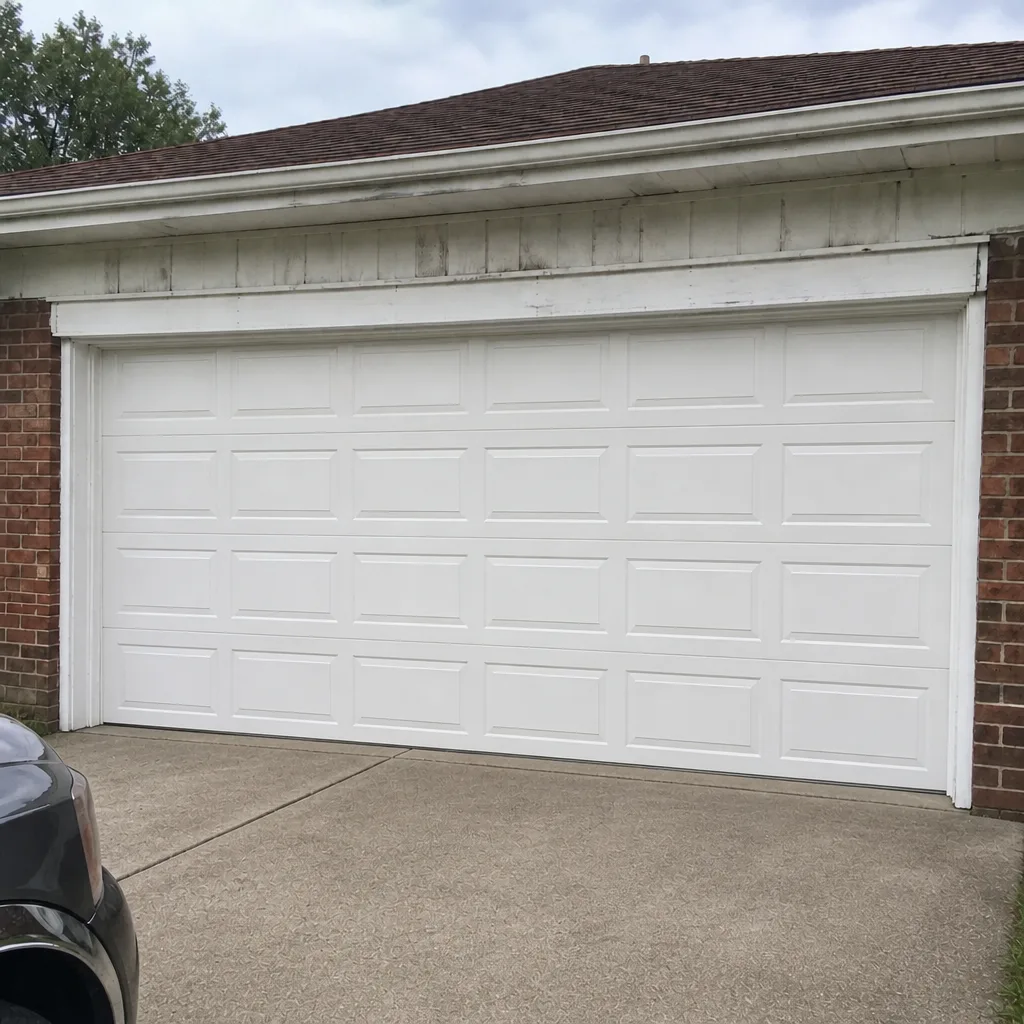 After
When to Call a Professional
Call a professional the moment you see a broken spring, a snapped or frayed cable, a door hanging crooked, or a car trapped inside a garage you can’t open. Call if the opener runs but the door doesn’t move, if the door reverses on its own, or if anything about the system feels heavier or noisier than it used to. An open garage on an attached Concourse home is a security issue, so don’t wait on that either.
Garage Door Repair Concourse offers free estimates in Concourse. Call (844) 542-3280. The written estimate sets the price, and we agree on it before any work starts. We answer 24/7. Fast dispatch from 7am to 7pm, Sunday through Friday. Whether the fix is a spring, a cable, an opener, or a full replacement, we can work with the brand you already own.
Frequently Asked Questions
Yes, if your opener has a battery backup, or if you use the manual release cord. Pull the red handle only when the door is fully closed or fully open, then lift the door by hand from the bottom center. If it feels too heavy, stop and call for help. We answer 24/7 at (844) 542-3280.
Stop using the opener, keep everyone clear of the door, and call for spring repair. Don’t try to close the door by hand or replace the spring yourself, because high-tension springs can cause serious injury. The written estimate sets the price, and the price is agreed before any work starts. Call (844) 542-3280 for a free estimate.
Lock the interior entry door, keep everyone away from the door, and close the garage from the outside if you can. Don’t cut or remove the cable, and don’t try to force the door down. Then call for same-day service at (844) 542-3280. Fast dispatch from 7am to 7pm, Sunday through Friday.
No, the written estimate sets the final price. We quote the job before any work starts, and the price you agree to is the price you pay. If the job turns out to need something different, we talk it through with you first. Call (844) 542-3280 for a free estimate.
The local professional we connect you with is licensed and insured as the state requires. Our technicians have up to 14 years of experience, and we work on equipment from LiftMaster, Chamberlain, Genie, Clopay, Amarr, Wayne Dalton, Craftsman, and Raynor. Call (844) 542-3280 to book.
Yes, we handle same-day emergency calls for doors that are stuck open, stuck closed, or unsafe. Call (844) 542-3280. We answer 24/7. Fast dispatch from 7am to 7pm, Sunday through Friday. A call outside dispatch hours is booked into the next opening.
Repair is usually the right call if the panels, track, and opener are sound and only a spring or cable failed. Replacement makes sense when the door is bent, cracked, or beyond a safe repair. We give you a straight answer after the diagnosis, and our garage door installation team can handle a replacement if that’s the route.
The Bottom Line
Garage door emergencies in Concourse come down to two situations: a mechanical failure that strands your car or leaves the house open, and a power outage that makes a working door useless. Both reward preparation. Find your release cord and practice pulling it with the door closed. Keep a charged battery backup if you rely on the garage. Leave spring and cable work to a trained technician, because that’s safety work. Have your opener model, door brand, and spring type ready before you call. And if something feels wrong, don’t wait for it to fail. Call (844) 542-3280. We answer 24/7. Fast dispatch from 7am to 7pm, Sunday through Friday. Free estimates, and the written quote is the price.
Written by the team at Garage Door Repair Concourse.