
Last updated November 21, 2026
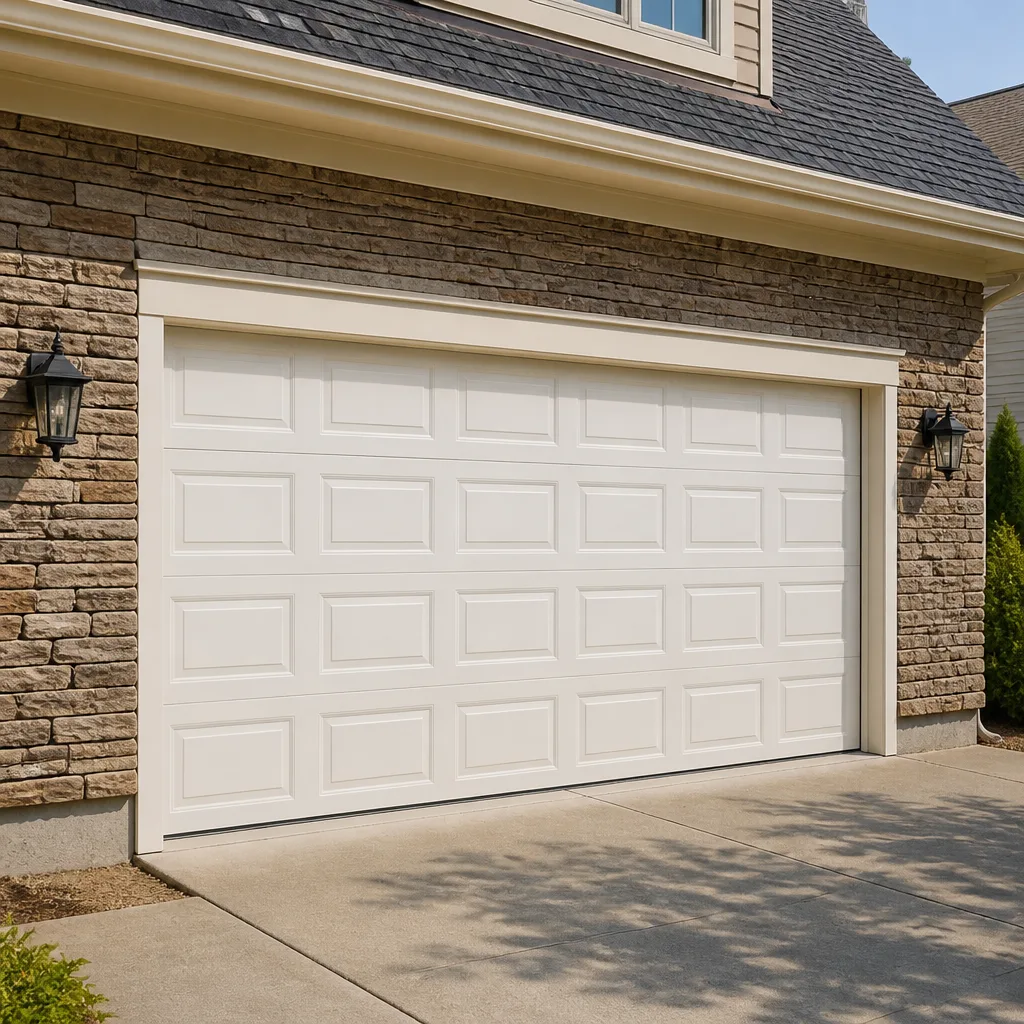 Raised-panel steel
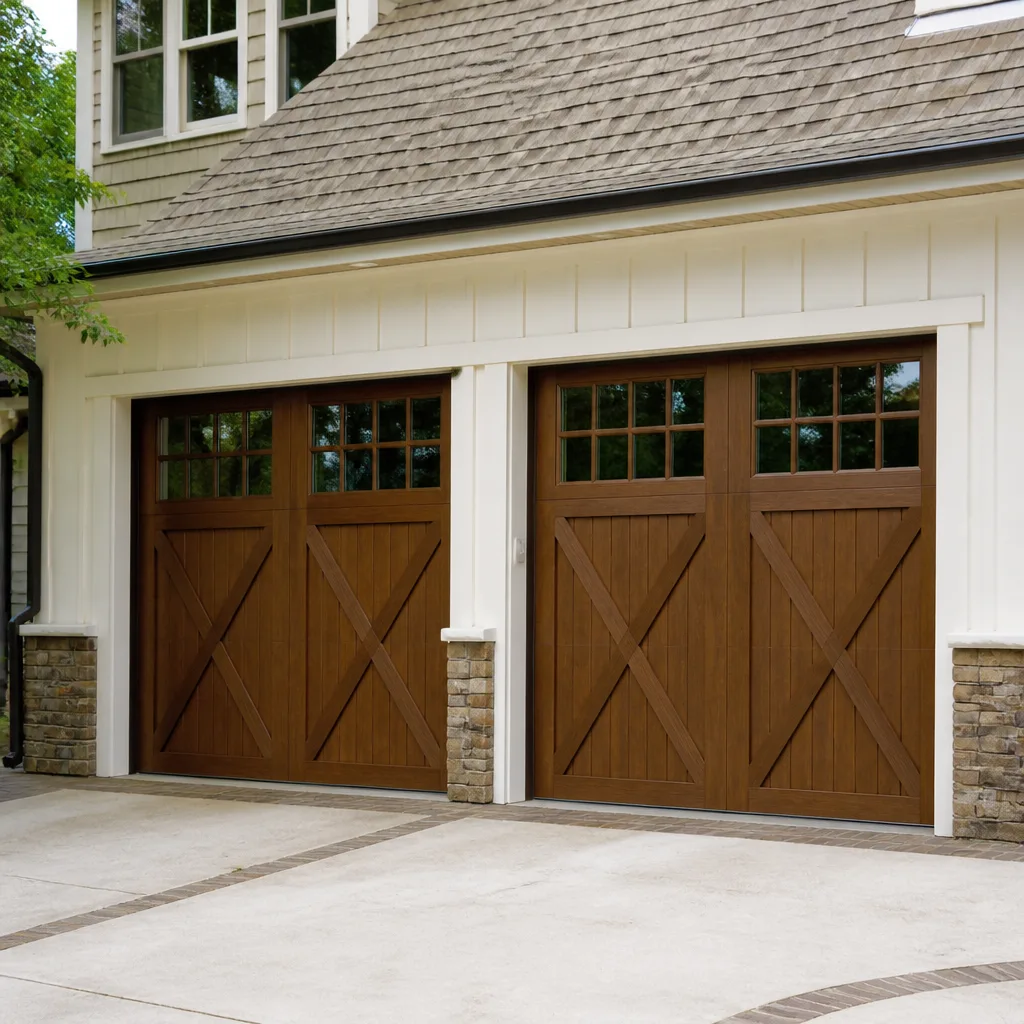 Carriage house
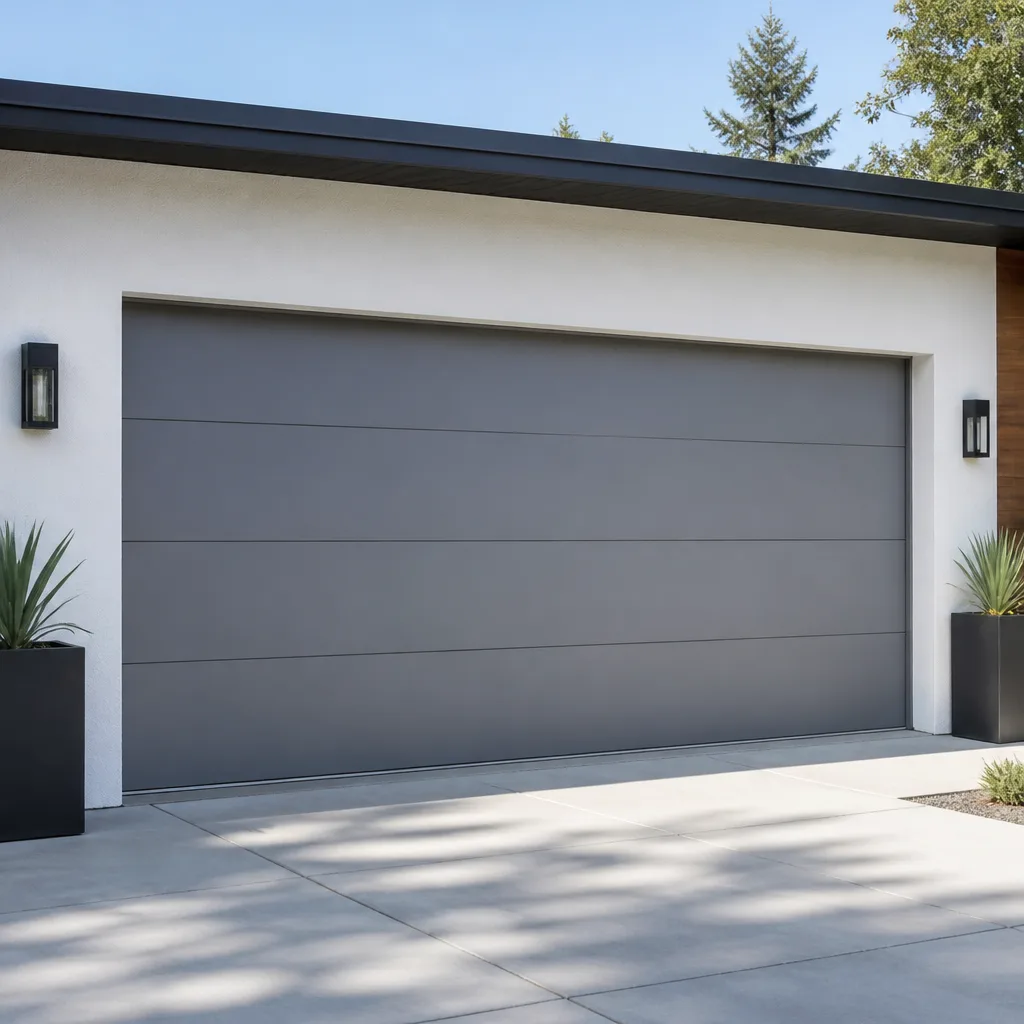 Modern flush
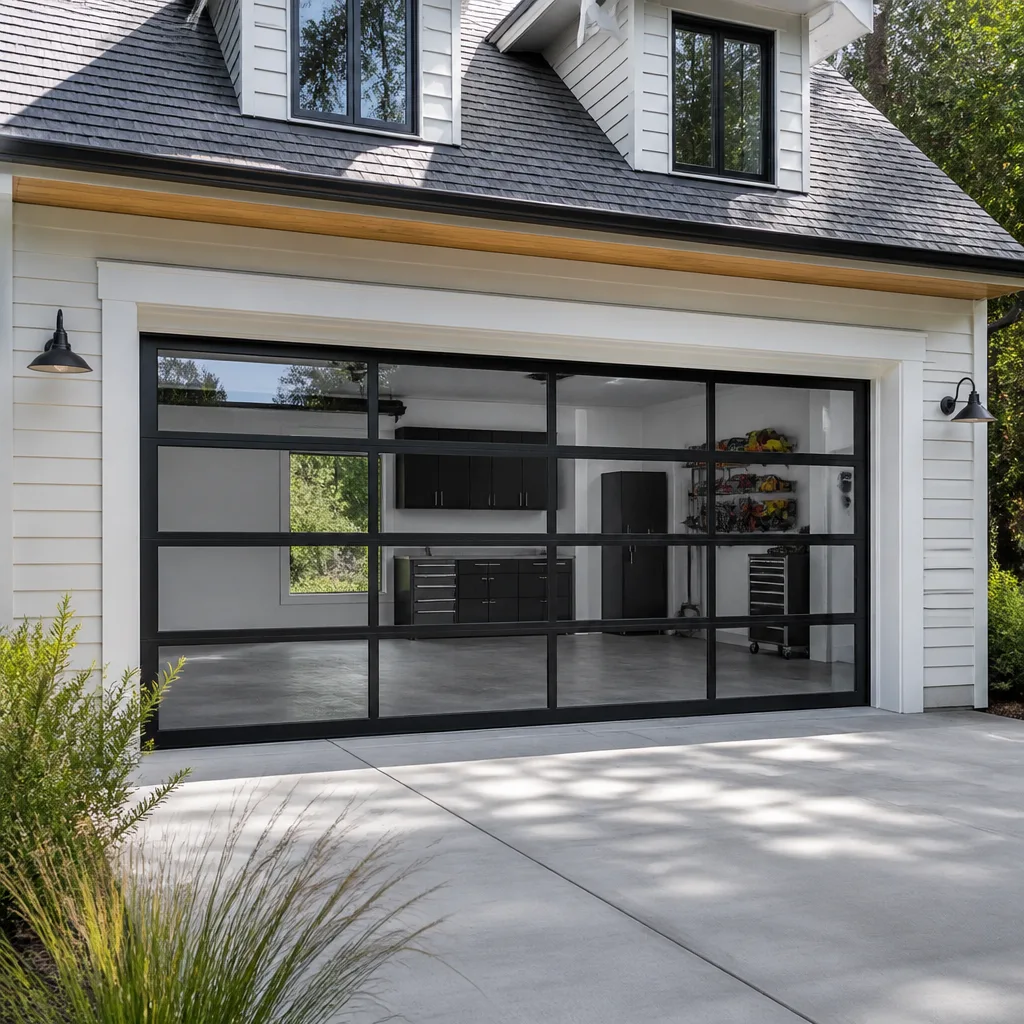 Full-view glass
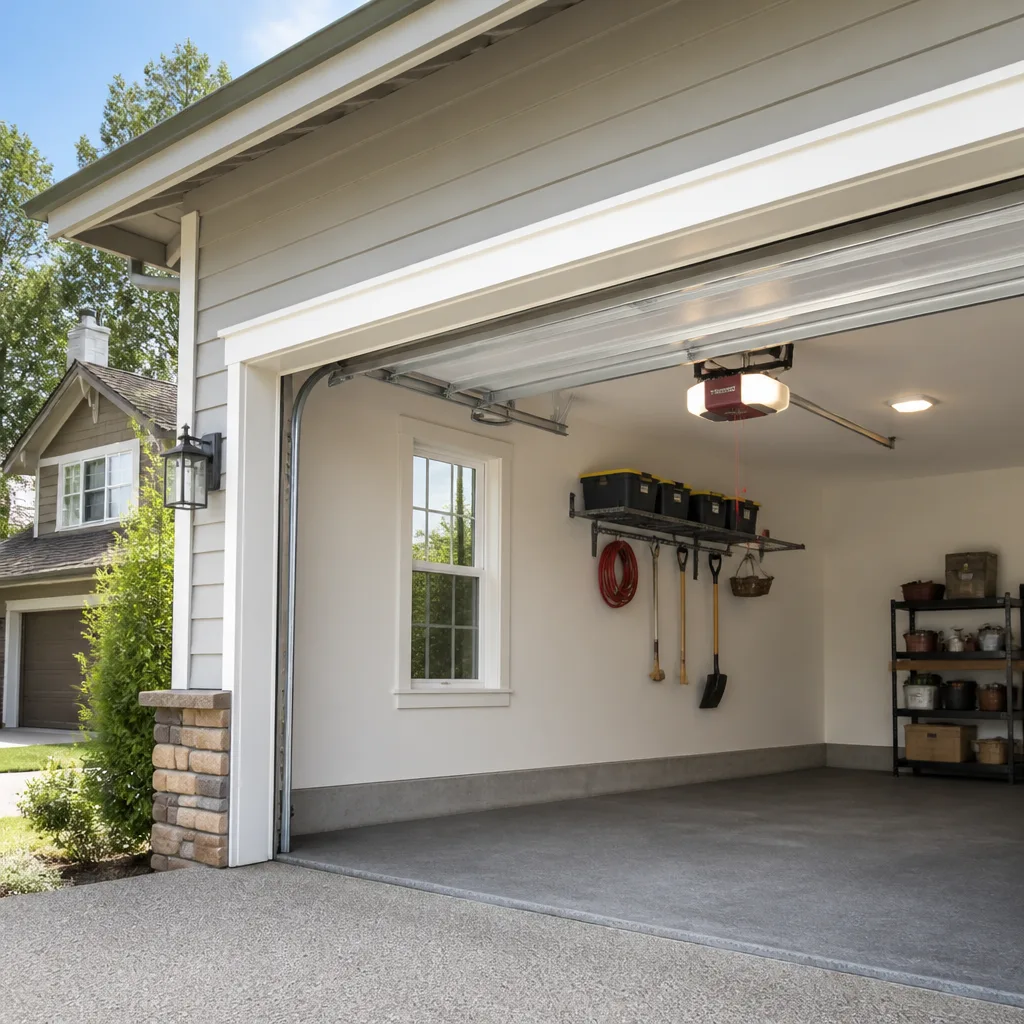 LiftMaster openers
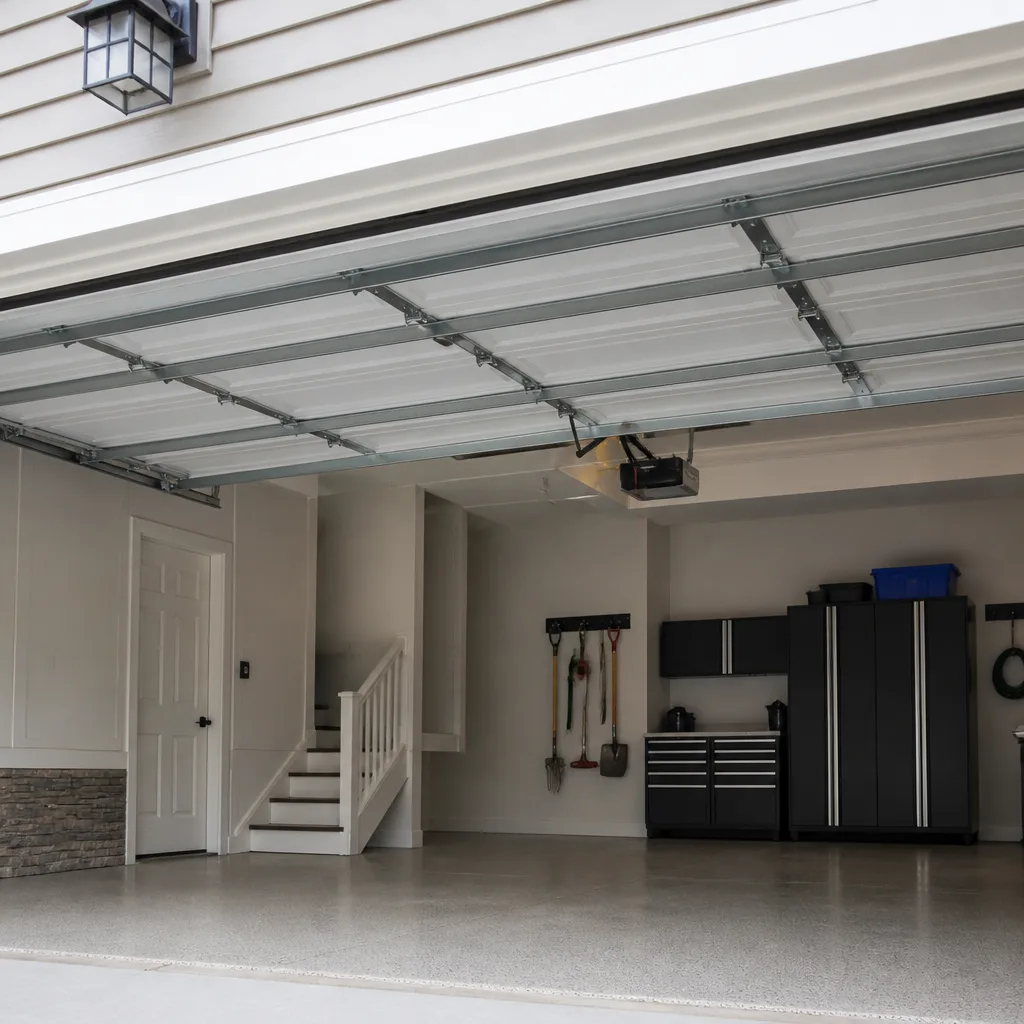 Chamberlain openers
Full 25-point door and opener safety check with every visit - springs, cables, rollers, tracks, and your LiftMaster or Chamberlain opener included
You get a price before we start. It does not change when the pro arrives.
Get your free estimateGarage Door Permits, Codes & Inspections in Concourse, NY: What You Need to Know
Plenty of homeowners in Concourse assume a spring swap or an opener replacement never touches the permit desk. In New York City’s jurisdiction, that assumption gets expensive. A full garage door replacement is often treated as a structural alteration, which means work done without a permit can surface as an open violation on a title search when you sell. This guide walks through when the NYC Building Code actually requires a permit, how UL 325 compliance affects openers installed after 2016, what inspectors look for, and how to check whether prior work at your Concourse home was ever filed.
Quick Answer
In Concourse and the rest of New York City, routine garage door repair – replacing springs, cables, rollers, hinges or an opener – generally does not require a permit because it’s classified as ordinary repair. A full door replacement, structural changes to the opening, or new electrical work for an opener often does require a permit and inspection through the NYC Department of Buildings. When in doubt, confirm with the DOB and the Bronx Community Board that covers your address before work begins.
Styles & brands we work with
- Raised-panel steel
- Carriage house
- Modern flush
- Full-view glass
- LiftMaster openers
- Chamberlain openers
Table of Contents
- When does NYC require a permit for garage door work?
- NYC DOB vs. Bronx Community Board jurisdiction
- UL 325 compliance and openers installed after 2016
- Fire-rated doors for attached garages
- How to verify if prior work was permitted
- What inspectors actually look for
- What to do before you sell a Concourse home
- Common mistakes to avoid
When Does NYC Require a Permit for Garage Door Work?
New York City draws a line between repair and alteration, and garage doors land on both sides of it depending on scope. The dividing question is simple: are you restoring the door that’s already there, or are you changing the structure or the building’s envelope? Repair stays on one side. Replacement and structural work usually cross into the other.
In our experience across Concourse, homeowners most often need to think about permits in these situations:
- Full door replacement. Swapping out the entire door and track assembly is generally treated as an alteration to the building envelope, and that typically triggers a DOB filing.
- Changing the opening. Widening, raising or reframing the header is structural work. It needs a permit and, in most cases, engineering input.
- New electrical circuits. If an opener needs a dedicated circuit or any new wiring run, that’s electrical work and follows electrical permit rules.
- Fire-rated assemblies. Replacing a door that’s part of a rated separation (more on this below) changes a life-safety component and needs review.
- Spring, cable, roller and track repairs. These are classified as ordinary repair in most cases and don’t require a filing.
- Opener replacement on existing wiring. Swapping a LiftMaster or Chamberlain unit onto existing wiring is usually repair, not alteration. New wiring changes the answer.
That last distinction matters because it’s where most do-it-yourself projects go sideways. A homeowner replaces an opener, adds a circuit to feed it, and never files. The door works fine. The paperwork doesn’t exist. Years later it becomes a line item on a title search.
We always tell Concourse customers to ask the DOB directly before assuming anything. The rules are narrow and specific, and a five-minute phone call beats a violation notice.
NYC DOB vs. Bronx Community Board Jurisdiction
People in Concourse sometimes confuse two different authorities. The NYC Department of Buildings issues permits, reviews plans and conducts inspections. The Bronx Community Board is a land-use and community voice – it doesn’t issue permits, but it comments on zoning and large projects in its district. For a residential garage door job, the DOB is the agency that matters.
Here’s how the two roles break down:
- NYC DOB: Issues work permits, reviews plans for structural and electrical work, dispatches inspectors, and issues violations. This is where a garage door replacement gets filed.
- Bronx Community Board: Advises on land use, zoning, and neighborhood concerns. It doesn’t approve individual residential garage door permits, but it’s the right body to understand local zoning context if your property is unusual – a corner lot, a shared driveway, a property near a zoning boundary.
For a typical Concourse home with a standard attached or detached garage, the practical sequence looks like this:
- Confirm with the DOB whether your specific scope requires a filing.
- If it does, the filing is prepared by a licensed professional – often an architect or engineer for structural work, a licensed electrician for electrical work.
- The DOB reviews the filing and issues the permit.
- Work proceeds according to the approved plan.
- The DOB inspects the work and signs off.
Where the Community Board comes in is the broader picture – if you’re considering a change to the property that touches zoning, it’s worth knowing what the Board has said about the area. For a straight door-for-door replacement, it’s almost never part of the conversation.
UL 325 Compliance and Openers Installed After 2016
UL 325 is the safety standard for garage door operators, and it governs the safety features every automatic opener must have. The standard has been updated several times. Since the 2016 revision, openers sold in the US are required to include specific entrapment protection, and inspectors look for those features on any opener installed or replaced after that point.
What inspectors and, more importantly, what the standard itself expects:
- Primary entrapment protection. The operator must detect an obstruction in the door’s closing path and reverse. On most modern openers this is built into the logic board via a force-sensing circuit.
- Secondary entrapment protection. Either a photo-eye system across the opening or a door-edge sensor. On most residential openers sold since 2016, photo-eyes are standard.
- Correct installation height. Photo-eye brackets are supposed to sit close to the floor and be aligned so the beam is unbroken. A sagging bracket or a misaligned lens is a common inspection failure.
- Constant-pressure as a fallback. For certain operator types, the standard allows a constant-pressure mode where the door only moves while the button is held. That’s not the norm for residential openers, but it’s part of the standard’s hierarchy.
- Proper labeling. The opener’s label and the safety-reverse test instructions should be visible on the unit or in the manual at the control location.
If you’re replacing a Genie or Craftsman opener in Concourse, ask the technician to confirm the new unit meets the current UL 325 revision and to walk you through the safety-reverse test before leaving. That test – place a 2×4 flat on the ground under the closing door and confirm it reverses – is the single most useful thing you can check yourself after any opener work.
Where this connects to permits: replacing an opener is usually repair, but the unit still has to meet the current standard. A non-compliant opener is a problem in its own right, separate from whether a permit was ever filed.
We work on LiftMaster, Chamberlain, Genie and Craftsman systems because those are the four operators in most Concourse garages. When a homeowner is replacing a failing unit, our garage door opener repair approach is diagnosis first – if the opener is fixable and compliant, repairing it is usually the better call.
Fire-Rated Doors for Attached Garages in NYC Residential Buildings
If your Concourse garage is attached to the house – a common layout in many Bronx homes – the door between the garage and the living space is a fire separation. It’s not a garage door in the overhead sense; it’s the pedestrian door. But it’s part of the same code conversation, and homeowners often don’t realize the rules apply.
The general principle in NYC residential code: any door separating a garage from a habitable space has to resist fire for a set period (typically a rated door, labeled for the purpose), it has to self-close and self-latch, and it can’t have gaps that allow smoke or fire to pass. Swapping a hollow-core interior door onto that opening is a code problem even though the door works fine day to day.
What this means for a Concourse homeowner:
- Don’t substitute. When a labeled fire-rated door fails, it gets replaced with another labeled door of the same or higher rating. A hardware-store interior door isn’t a legal substitute.
- Self-closing hardware matters. Rated doors are supposed to have self-closing hinges or a spring hinge. Removing them because the door is “annoying to close” is a code issue.
- Steps matter too. A step up from the garage to the house is common, and any change to the threshold is part of the fire separation.
- A garage door replacement doesn’t touch this. Replacing the overhead door doesn’t change the fire separation at the pedestrian door – but if you’re doing both, the permitted work covers both.
When a door frame or the door itself is swapped in an attached garage, that’s often a good moment to ask the DOB whether the pedestrian door needs review. In our experience, homeowners are surprised to learn the interior door is regulated at all.
How to Verify If Prior Garage Door Work Was Permitted
If you’ve owned your Concourse home for a while, you may not know whether the garage door was ever replaced under permit. If you bought recently, the prior owner’s paperwork may be incomplete. There’s a straightforward way to find out.
- Check the DOB’s online records. The DOB maintains a public record of permits and violations for every property. Search by your address. If a door replacement was filed, there’s a permit record. If it wasn’t, there won’t be one – which isn’t proof that work was done, but it’s the starting point.
- Look at the title report. If you bought within the last few years, your title search may have flagged any open violations. Pull out the report and look for DOB-related entries. An open violation on a garage door replacement is often small but visible.
- Ask for the door’s documentation. Manufacturers like Amarr, Wayne Dalton and Raynor label their doors with model and installation info. If the label matches a model that was produced in a period roughly consistent with the home’s other renovations, that’s a soft signal.
- Inspect the installation for permit-era details. Newer installations often carry code-required elements that older doors don’t – proper photo-eye placement, correct track anchoring, tighter tolerances. A technician who works on doors daily can often tell when an installation looks recent versus original.
- If you suspect unpermitted work, get guidance before selling. A local real estate attorney or expediter can tell you whether to retroactively file, disclose, or take another route. Retrofiling is often possible but needs a licensed professional to prepare the paperwork.
If you find prior work that was clearly done without a permit and you’re not selling anytime soon, the practical move is often to have a technician inspect the installation and document its condition. A door that was installed correctly but unpermitted is a much smaller problem than a door that was installed incorrectly. We see both in Concourse.
For homeowners who’d rather not guess, our garage door repair technicians can look at the installation and confirm what looks stock, what looks replaced, and what looks off.
What Inspectors Actually Look For
When a permit is filed and the work is complete, a DOB inspection confirms the installation matches the approved plan and meets code. In our experience, the inspections on residential garage door replacements are focused on a handful of items.
- Track anchoring and plumb. Tracks must be secured to structural framing and vertical. A loose track is the most common failure item on an inspection.
- Spring and cable attachment. Correct anchor points, correct hardware, no substitutes. Inspectors want to see the door balanced and operating smoothly.
- Headroom and clearance. The door has to open fully without interference with the structure above it. If the plan shows a specific clearance and the actual door doesn’t achieve it, that’s a fail.
- Safety reverse and photo-eyes. Confirm the reversing function works and the photo-eyes are properly mounted and aligned. UL 325 compliance is checked at inspection.
- Electrical connections. If new wiring was part of the scope, the electrical inspection runs separately and the terminations and box installations have to match code.
- Fire separation (attached garages). If the work touched the separation between garage and house, that’s inspected separately and confirms the rated door, self-closing hardware and gap-free installation.
- Final walkthrough. The inspector wants to see the finished installation operate and confirm it matches the approved plan.
Most failures we hear about are small – a misaligned photo-eye, a track that isn’t plumb – and they get fixed and re-inspected. The bigger issue is unpermitted work that never got a chance to be inspected at all. If you’re planning a Concourse door replacement and don’t yet have a technician lined up, our garage door installation team can confirm the scope first, so you know exactly what needs to be filed.
What to do Before You Sell a Concourse Home
This is where the permit conversation gets real. When you sell a Concourse home, the buyer’s title search will flag any open DOB violations associated with your address. An unpermitted garage door replacement doesn’t automatically kill a sale, but it can hold up a closing and reshape the negotiation.
The steps we’d suggest in the months before a sale:
- Pull your DOB records. Confirm what, if anything, exists for the garage door.
- Have a technician inspect the door. A current-condition inspection gives you a written description of what was installed and how it’s operating. That document is useful if a buyer’s attorney asks questions.
- Plan the fix. If there’s an open violation, it can often be resolved by retroactively filing – a licensed professional prepares the paperwork, the DOB reviews and inspects, and the violation clears.
- Talk to your attorney. Your real estate attorney should know whether to disclose, remedy or negotiate the issue.
- Don’t do unpermitted repairs on the way out. Quick “fixes” before listing often create more problems than they solve.
We’re not attorneys and we don’t file paperwork, but we do look at a lot of Concourse garages. In our experience, the difference between a smooth closing and a delay is usually whether the work was filed at the time it was done. Revealing it early and fixing it is almost always cheaper than a title search surprise.
Common Mistakes to Avoid
- Assuming a spring or opener swap needs a permit. In most cases it doesn’t – but if you also replace the door, rewire the opener, or reframe the opening, the answer changes. Confirm with the DOB.
- Replacing the door but keeping the old opener unverified. A new door on an older operator can fail the UL 325 complance check if the operator doesn’t meet the standard. Have the opener checked at the same time.
- Using the wrong interior door in an attached garage. A hollow-core door isn’t a legal fire separation. In Concourse, we see this most often in older homes that have been renovated by prior owners who didn’t know the rule.
- Adding an electrical circuit without a permit. New wiring for an opener is electrical work and follows electrical permit rules, even when the outlet run looks minor.
- Removing self-closing hardware on a rated door because it’s inconvenient. That hardware is part of the code requirement, not an optional add-on.
- Assuming the previous owner filed the paperwork. Check the DOB records and title search yourself. Prior work that wasn’t filed is a common discovery in Concourse.
- Doing structural changes without engineering input. Widening the opening or changing the header is structural. It needs a licensed engineer and a permit, not a handyman.
See the difference
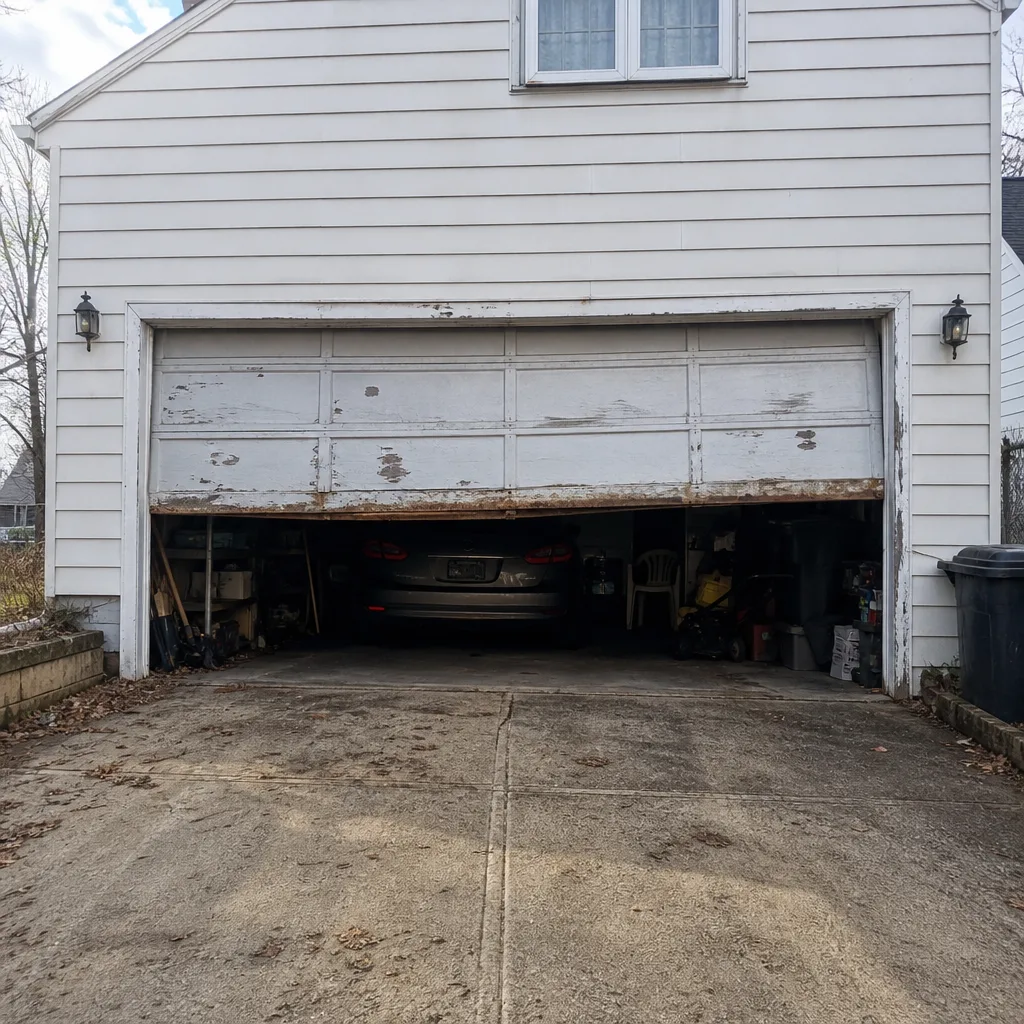 Before
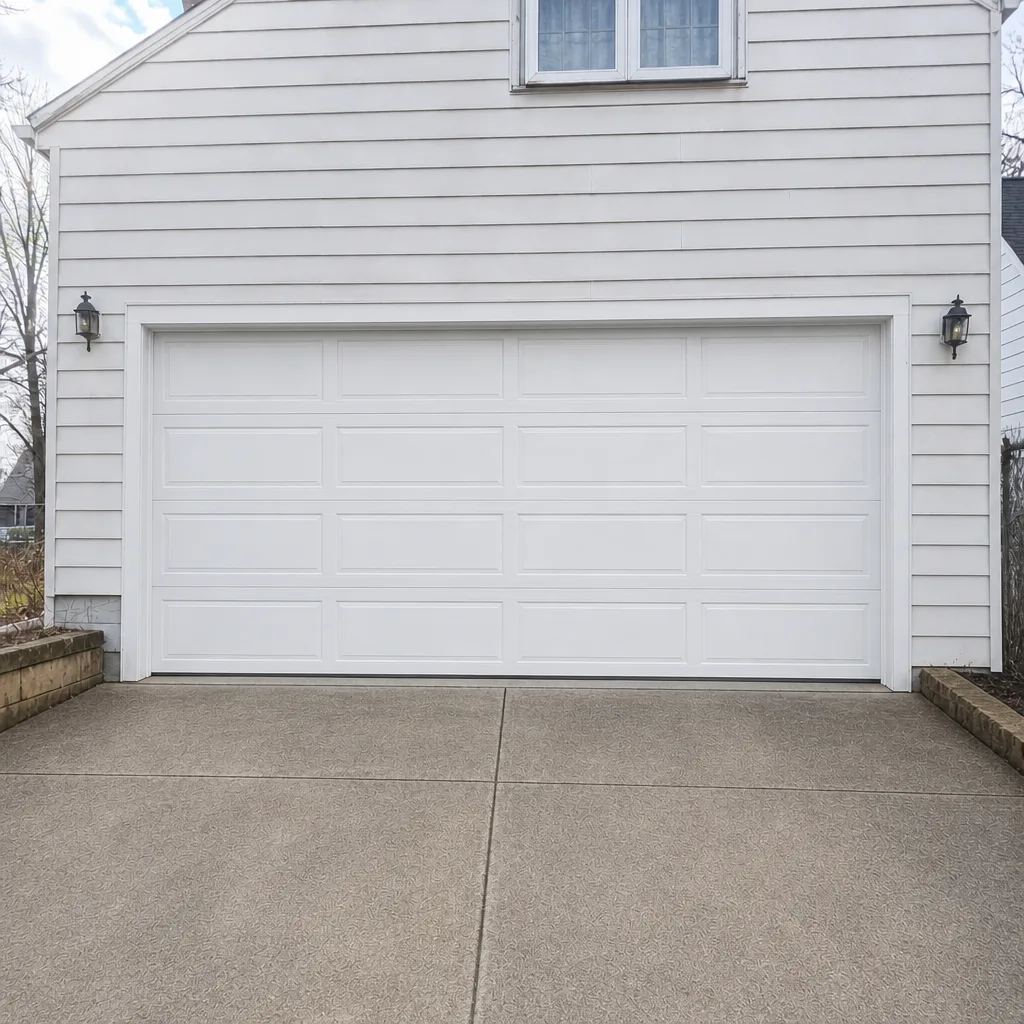 After
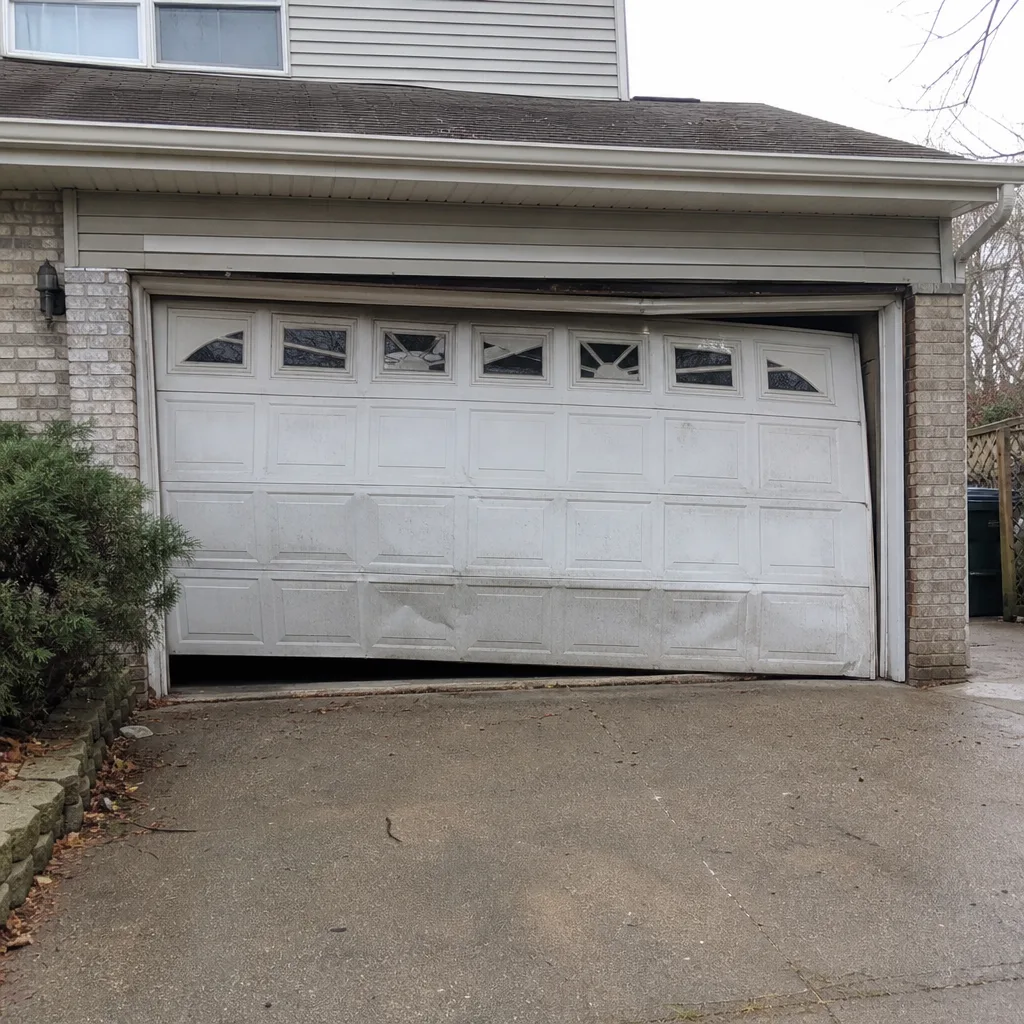 Before
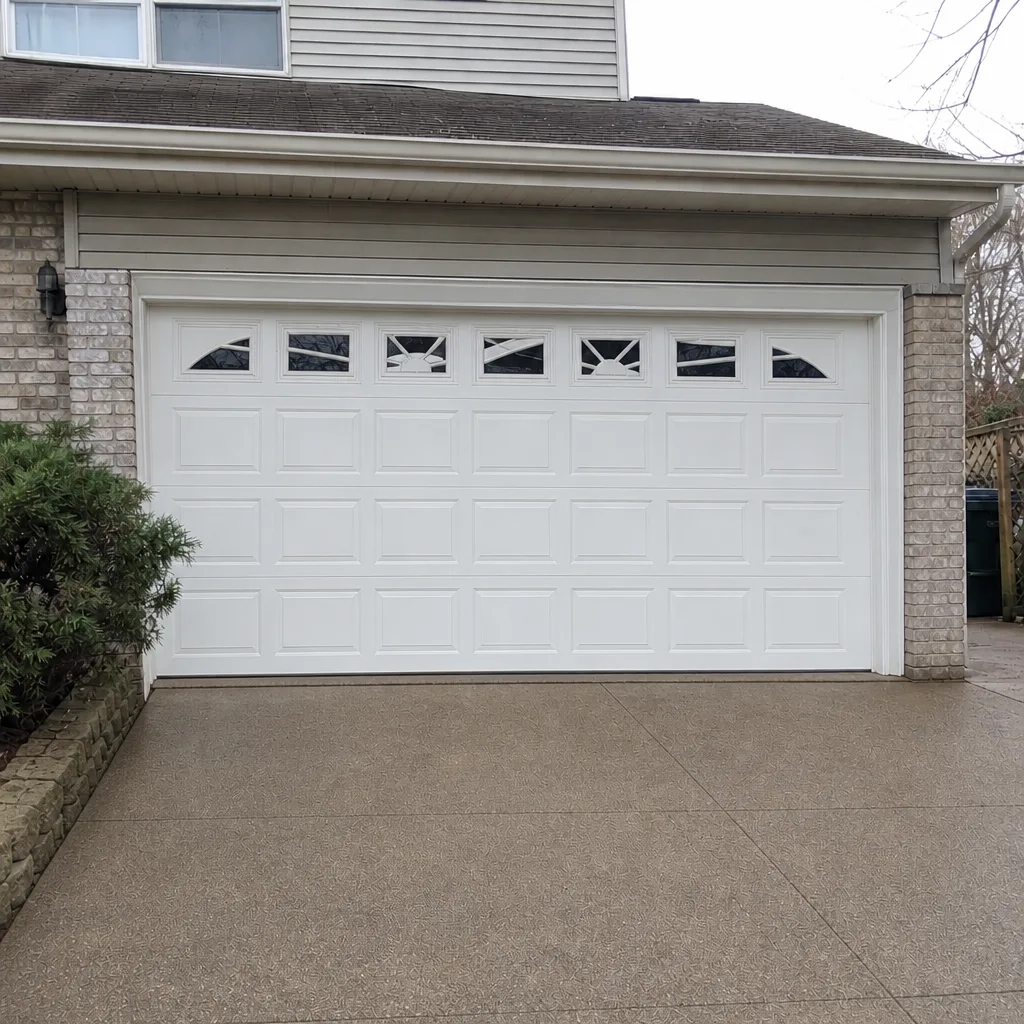 After
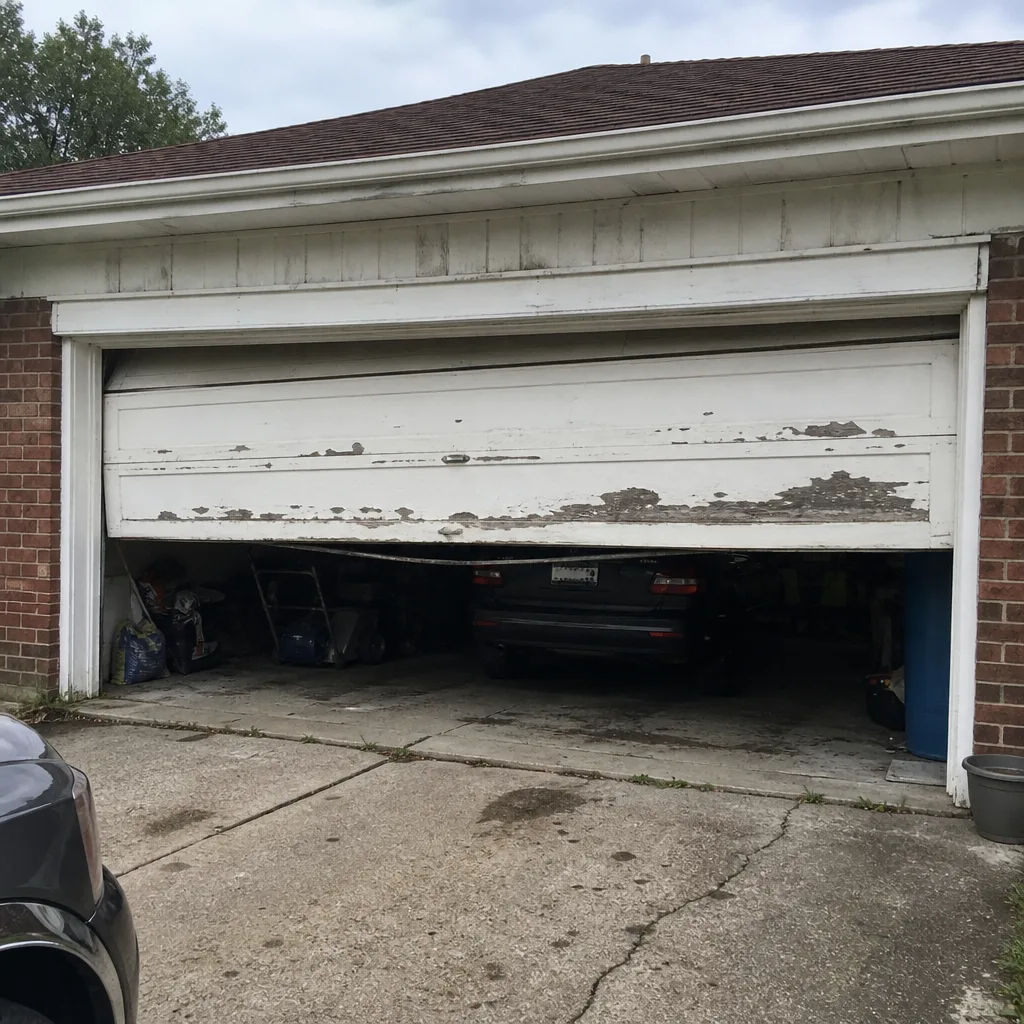 Before
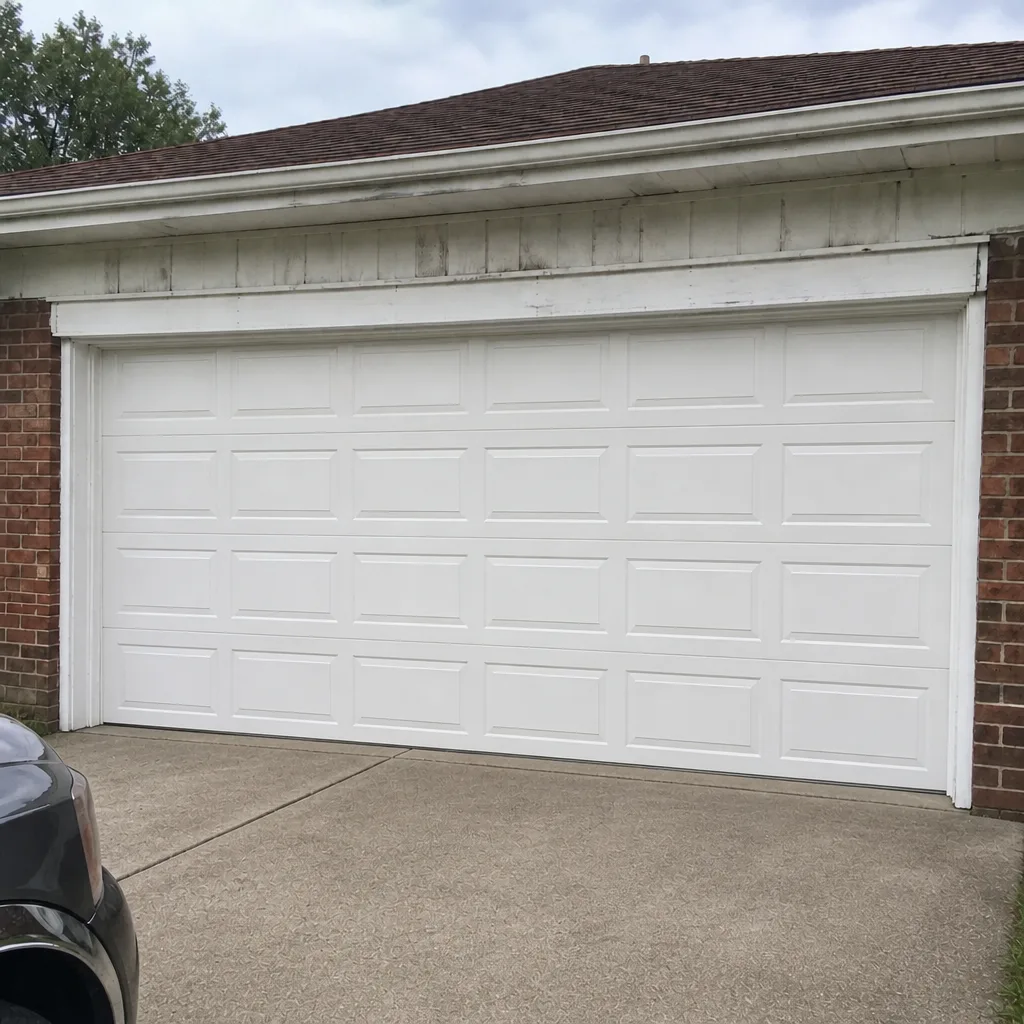 After
When to Call a Professional
Call a professional before any scope decision that touches the door structure, the opening, or the electrical work. Spring repair in particular is safety work – a torsion spring is under high tension, and the wrong technique can injure you badly. If the door won’t open or close, if you hear a sharp bang from the torsion shaft, if the door is visibly crooked, or if the opener fails the safety reverse test, that’s a professional call, not a weekend project. For a straightforward replacement or opener swap in Concourse, the technician can also tell you what (if anything) needs to be filed with the DOB. Garage Door Repair Concourse offers free estimates in Concourse – call (844) 542-3280. We work on whatever brand you already have, from Clopay and Amarr doors to LiftMaster and Genie openers. Our technicians have up to 14 years of experience. We answer 24/7. Fast dispatch from 7am to 7pm, Sunday through Friday.
Frequently Asked Questions
In many cases, yes. A full garage door replacement is often treated as an alteration to the building envelope under the NYC Building Code and typically requires a DOB filing and inspection. Spring, cable, roller or opener replacements on the existing door are generally classified as ordinary repair and don’t require a permit. Confirm the scope with the NYC DOB before work begins. Call (844) 542-3280 for a free estimate – estimates are free.
Often, yes. Unpermitted work can usually be resolved by filing retroactively through a licensed professional, who prepares the paperwork, the DOB reviews it and inspects the installation. The process takes time and isn’t guaranteed, but it’s almost always better than letting the issue surface at a title search. A local real estate attorney can advise on the best route for your situation.
Usually no, if the replacement uses existing wiring. If the new opener requires a dedicated circuit or any new electrical work, that side of the job follows electrical permit rules and needs a filing. The opener itself still has to meet the current UL 325 safety standard, including working photo-eyes and a functioning safety reverse.
A fire-rated door resists fire for a set period and is labeled for that purpose. In an attached garage, the pedestrian door between the garage and the house is a fire separation and must be a labeled rated door with self-closing hardware. A standard interior door isn’t a legal substitute. If the rated door fails, it gets replaced with another rated door of the same or higher rating.
Check the NYC DOB public records for your address, pull your title report from when you purchased, and ask your real estate attorney to review anything flagged. A technician can also inspect the installation and tell you whether it looks recent. Combine those three and you’ll have a clear picture. Call (844) 542-3280 if you’d like a technician to look at the installation.
Most failures are small – a misaligned photo-eye, a track that isn’t plumb, a missing label – and they’re corrected and re-inspected quickly. Larger failures, like a door that doesn’t meet the approved plan, need a rework. The important thing is that the inspection happened at all; unpermitted installations never get the chance to fail safely. Call (844) 542-3280 for a free estimate before your next inspection.
The Bottom Line
The permit question in Concourse comes down to scope. Repair – springs, cables, rollers, an opener swap on existing wiring – usually doesn’t need a filing. Replacement and any structural or electrical change usually does. The NYC DOB makes the call, not the technician, and the safest move is to confirm before work starts. UL 325 compliance on any opener installed after 2016 is a separate but related check. Fire-rated doors between the garage and the house are regulated even though they don’t look like it. And verified permit records are what protect a Concourse homeowner at resale. When the scope is unclear, call before you buy.
If you’re looking at a repair, replacement or opener project in Concourse and want a straight answer on what needs to be filed, we can help. See our garage door repair in Concourse services or reach out directly. Call (844) 542-3280. We answer 24/7. Fast dispatch from 7am to 7pm, Sunday through Friday. Same-day service is available for repair calls. The price is always quoted and agreed before any work starts, and the written estimate sets the final price.
Written by the team at Garage Door Repair Concourse.