
Last updated November 21, 2026
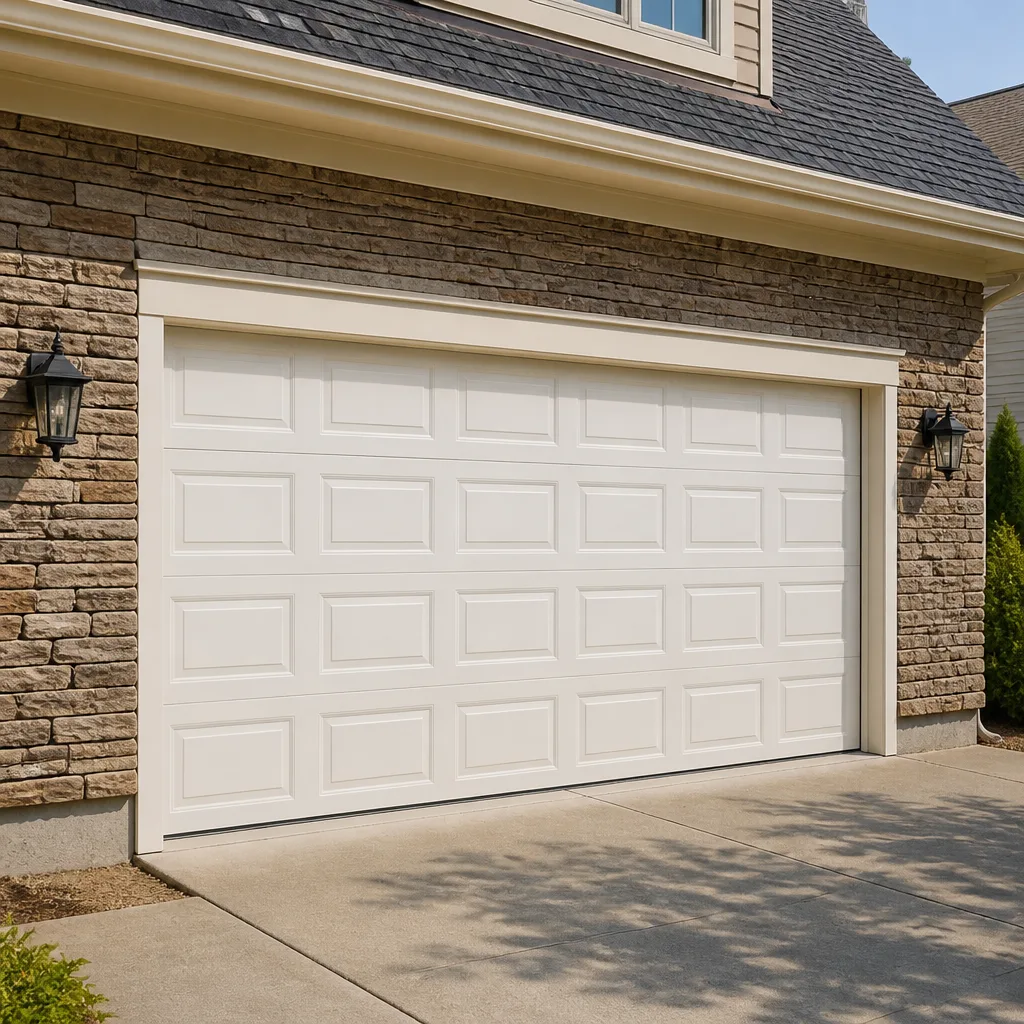 Raised-panel steel
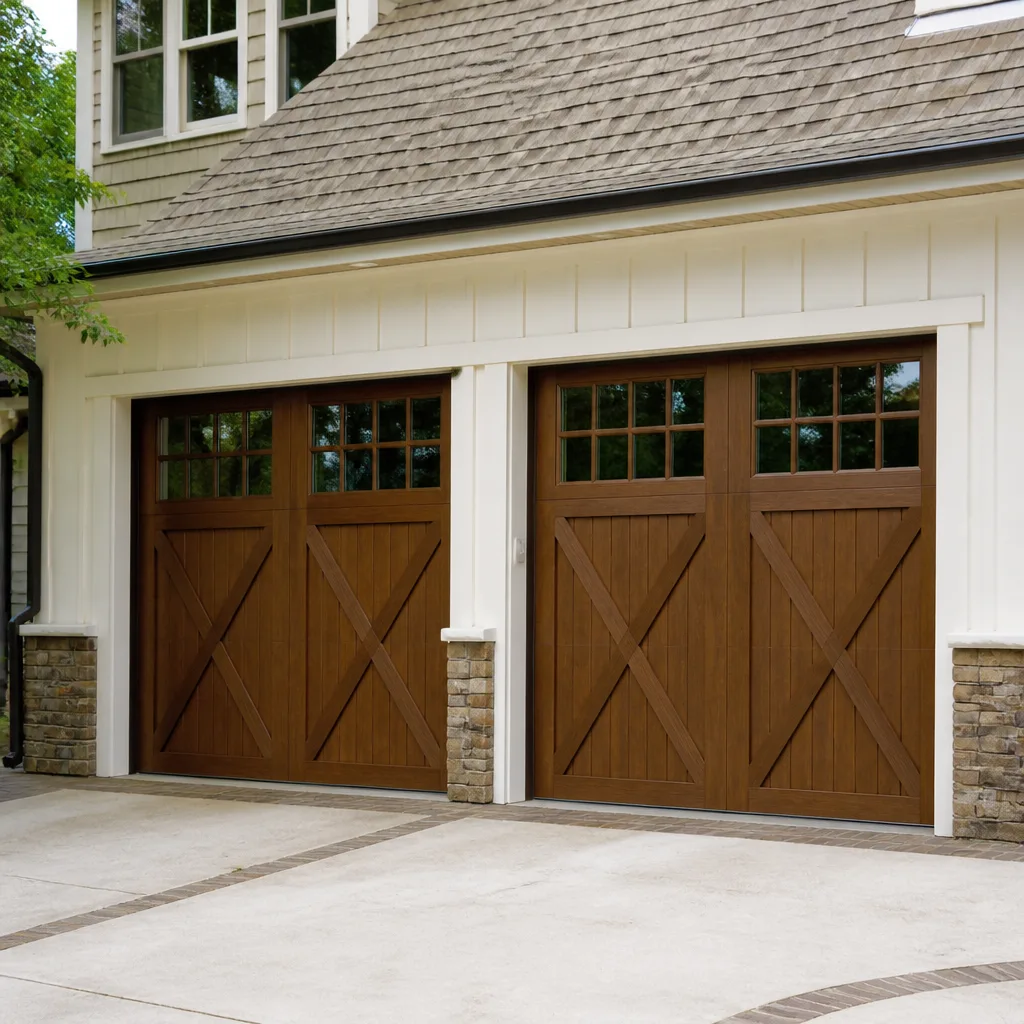 Carriage house
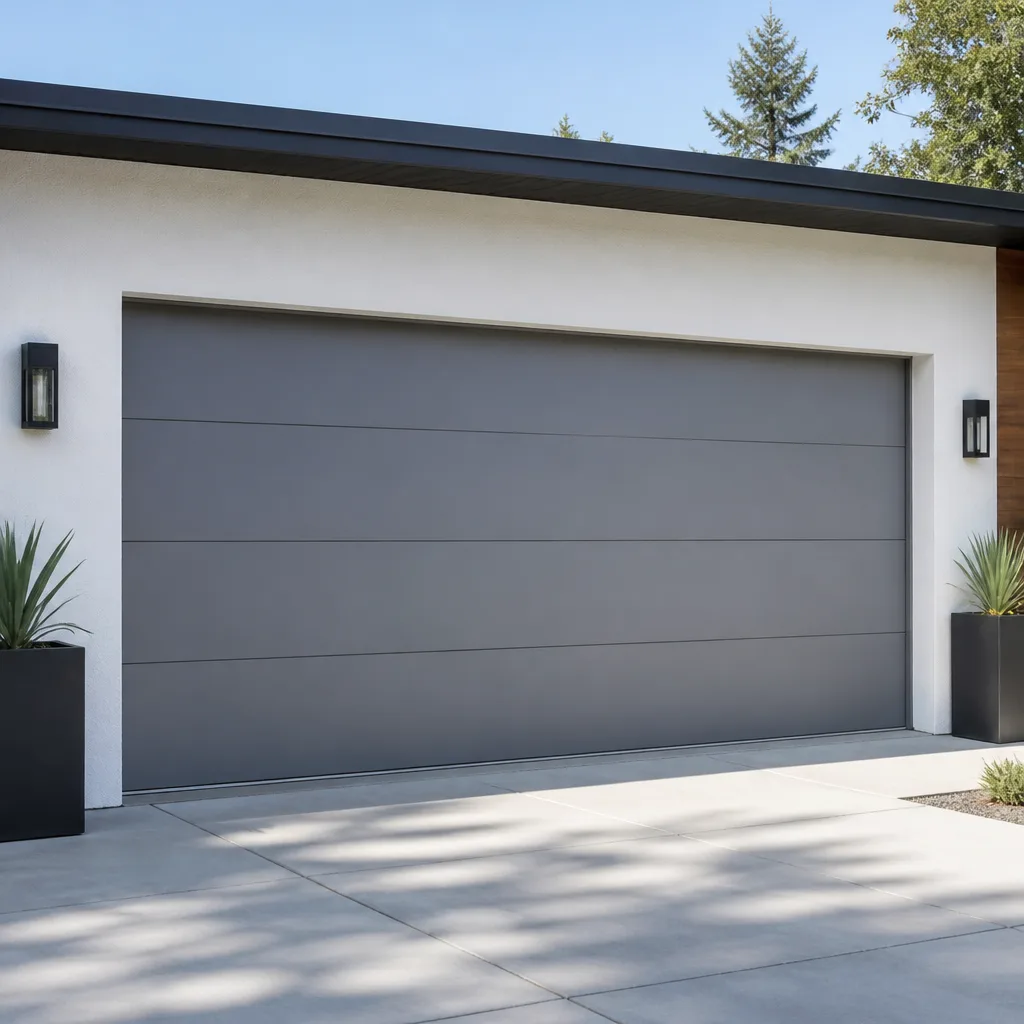 Modern flush
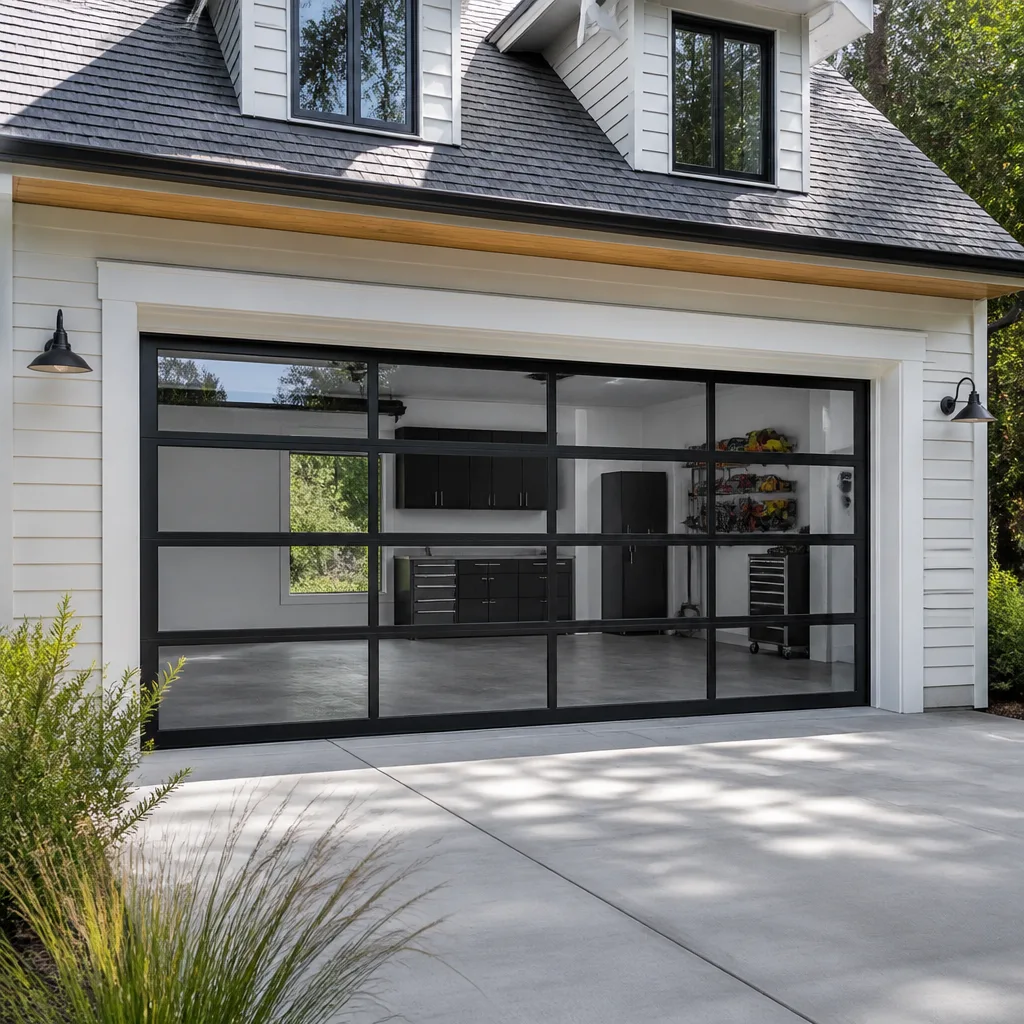 Full-view glass
 LiftMaster openers
 Chamberlain openers
Full 25-point door and opener safety check with every visit - springs, cables, rollers, tracks, and your LiftMaster or Chamberlain opener included
You get a price before we start. It does not change when the pro arrives.
Get your free estimateDIY vs Professional Garage Door: The Concourse Homeowner’s Decision Guide
Most homeowners in Concourse ask the wrong first question. They ask “Can I fix this myself?” when the better question is “Which part of this system can hurt me?” A garage door is a 200-pound counterbalance under tension, and torsion springs store enough energy to break a wrist or take out an eye. That’s not a warning-label disclaimer, it’s a physics fact about steel wound to roughly 150 foot-pounds of torque. This guide sorts the work into two honest piles: the handful of tasks that are genuinely dangerous or trigger code problems, and the ones you can safely handle on a Sunday with standard tools. We’ll also show you where DIY parts money actually saves and where it quietly costs more.
Quick Answer
A homeowner can safely handle weatherstripping, bottom seals, photo-eye alignment, and opener remote programming. Torsion springs, cable drums, and any bolt holding the header bracket under tension should be left to a trained professional. In Concourse, the work that triggers a building permit is the same whether you or a licensed technician does it, so DIY installs get no shortcut through the city’s code requirements. Everything beyond that short list of safe tasks is a call to a professional, and it’s cheaper than a hospital bill every time.
Styles & brands we work with
- Raised-panel steel
- Carriage house
- Modern flush
- Full-view glass
- LiftMaster openers
- Chamberlain openers
Table of Contents
- The Spring Is Not a DIY Part: Sorting Real Risk From False Alarm
- What a Homeowner Can Actually Do Safely
- NYC Code and Permits: What DIY Never Changes
- How to Tell if a Previous DIY Repair Caused Your Current Problem
- The Real Cost Math: DIY Parts vs. Professional Parts
- Your Brand, Your Equipment, and Where DIY Advice Goes Wrong
- How to Tell When DIY Has Reached Its Limit
- When to Call a Professional
The Spring Is Not a DIY Part: Sorting Real Risk From False Alarm
The list of garage door tasks a homeowner should never attempt is short. It’s also non-negotiable. Torsion springs, extension springs, cable drums, the drum set screws, and the bolts holding the header bracket to the wall are all part of a tension system. Winding a torsion spring with the wrong bars, or losing grip mid-wind, releases stored energy in a fraction of a second with no safe direction to stand. Extension springs can snap and whip if a containment cable isn’t installed. Cable drums are the second half of the same equation: cut a cable while the door is up and the drum can spin free and tear through whatever is nearby.
What makes this so easy to underestimate is how quiet a garage door is during normal operation. The springs are silent when they’re working. They’re only loud when they fail. In our experience on Concourse doors, most homeowners discover the load the hard way after trying to remove a bracket that felt loose while the door was down. The bracket isn’t loose, it’s holding.
Tasks that are genuinely dangerous for a non-professional
- Torsion spring replacement or adjustment. High-tension work, hours of stored energy, no safe shortcut.
- Extension spring replacement. Same stored energy system, same injury risk on failure.
- Cable replacement or drum removal. The cable is what transfers spring force to the door.
- Header bracket bolts under tension. Removing one while the door is loaded can drop the whole panel assembly.
- Track straightening on a loaded system. Bending a loaded track can shift the door’s weight unexpectedly.
What do torsion springs actually store?
Roughly 150 foot-pounds of torque on many single-car doors, and considerably more on double doors. That’s enough stored energy to seriously injure a person who loses control of the winding bar. This is why we treat garage door repair differently depending on which component needs work. A bottom seal can wait for a quiet afternoon. A torsion spring cannot. If a spring is broken, the door should not be operated until a trained technician has looked at it, and the vehicle stays where it is. A trained professional carries the winding bars, the containment hardware, and the experience to do the job without putting anyone in a safe-radius radius. When the door won’t move, we move fast, and spring repair is where that urgency matters most.
What a Homeowner Can Actually Do Safely
Plenty of garage door work is safe for a homeowner with a step stool and a screwdriver, and we’d rather you save the money than call us for something you can do in twenty minutes. The safe category shares a trait: none of it is holding stored counterbalance force. Weatherstripping, bottom seals, photo-eye alignment, opener remote programming, and light lubrication don’t affect the door’s tension and don’t involve any part of the door’s weight-bearing system. This matters on Concourse doors because a door that sits tight against the ground and stays well-lubricated is a door that puts less wear on its spring assembly over the years, so routine care genuinely extends the life of the parts you’d otherwise pay us to replace.
Safe tasks a homeowner can do
- Replace the bottom seal. Lift the door to its open position, slide the old seal out of its channel, slide the new one in. Typically one person with the right seal.
- Replace perimeter weatherstripping. The stop molding on the sides and top comes off with a pry bar and a few nails or screws.
- Align or clean the photo-eye sensors. Two small lenses on the sides of the door near the ground. Wipe them, check the alignment LED, and check the wiring on both.
- Program a remote or keypad. Pairing a remote on a Chamberlain or Genie opener is a button press on the head unit and a button press on the remote.
- Lubricate rollers and hinges. A light garage door lubricant on the hinges and rollers, not on the tracks, quiets the door and reduces wear.
- Balance test the door. Down, disconnect the opener, lift to waist height. It should stay. If it drops or rises, that’s a spring or balance issue for a professional.
For anything involving the opener’s brain rather than the door’s body, our garage door opener repair page covers the symptoms we most often see: remotes that won’t pair, wall buttons that misbehave, and openers that run but don’t lift.
NYC Code and Permits: What DIY Never Changes
The building permit belongs to the job, not to the person doing it. If an installation in Concourse requires a permit, the requirement is identical whether a homeowner installs the door on a Saturday or hires a professional. The city cares that the structure is safe, anchored, and wired correctly, not who held the drill. That means DIY installs don’t skip the code, they just move the paperwork onto the homeowner. The safest habit before any new door or opener goes up is to call the city’s building department and ask directly which permits apply to your particular installation. We won’t quote a code section for you because the answer changes with door weight, opener type, and how the existing structure is framed.
What we can tell you from years of working Concourse doors is where installs most often get flagged. Electric openers that weren’t wired to any switch or disconnect can complicate inspection. Doors that were anchored to framing too thin to hold the header bracket show up as sag over months. And a replacement door that changes the weight class without reconsidering the spring and opener will pass a visual look and fail on balance. This is where garage door installation gets its reputation for being a professional job: it’s not that the work is physically impossible, it’s that the door’s weight, spring, opener, anchors, and wiring all have to agree, and none of them tell you they disagree until months later.
Three permit questions worth asking before you start
- Does a full door replacement at my address need a permit, and does a same-size swap with no structural change?
- Does adding or replacing an electric opener need its own electrical sign-off?
- Is the existing framing and spring system rated for the weight of the door I’m planning?
Ask the city’s building department directly. A phone call now beats a stop work order later.
How to Tell if a Previous DIY Repair Caused Your Current Problem
Some of the doors we’re called out to in Concourse are failing because of a repair, not because of wear. A previous DIY fix that looked fine at the time can leave the door out of balance, and months later the door’s symptoms point back at that earlier work. The pattern is consistent. A door that was fine, then had one part replaced by a homeowner, then started making noise or reversing on its own is usually a door whose repair introduced a new misalignment.
Diagnostic signs that point to a previous DIY repair
- Door reverses for no reason on the way down. The safety sensors weren’t re-aligned after other work, or the opener was re-connected before the door was re-balanced.
- A grinding sound that started right after a repair. Rollers were replaced with the door still hanging on a loaded spring, so the roller brackets have been pulled out of square.
- Door drifts up or down when you let go mid-travel. The spring was adjusted without the door being properly balanced, or the wrong spring was installed for the door’s weight.
- Door hits something at one end of travel. New hinge or roller on one side only, so the door is lifting unevenly.
- Cable is visibly off the drum. A stop under tension. Don’t operate the door, and call a professional before anyone stands near it.
- Loose sheet metal screws holding the bracket. Often a sign the original anchors were removed and replaced with whatever was on hand instead of proper hardware.
Run these checks before you buy more parts. If anything on the list describes your door, we can help you sort it out with a straight answer about whether the fix is small or the earlier repair needs to be undone. That is what our team means by working on your brand: we work with the system that’s actually installed, including the parts that were added by hand.
The Real Cost Math: DIY Parts vs. Professional Parts
Here’s where the DIY calculation gets interesting. On weatherstripping, bottom seals, and photo-eye sensors, buying the parts yourself almost always beats paying someone to install them. On springs, cables, and openers, the math flips. Professional parts pricing is not usually better than retail, and we don’t pretend otherwise. What’s better is the outcome rate. A homeowner who has to buy a second spring because the first was the wrong wire size, and a set of winding bars, and has to stop partway through the job, hasn’t saved money. They’ve spent twice.
Where DIY saves money and where it doesn’t
- Bottom seal: DIY saves money. Same seal, low risk, standard tools.
- Weatherstripping: DIY saves money. Small materials, no tension.
- Sensor replacement: DIY is fine if wiring is already in place. Rerouting wires is a professional job.
- Remote or keypad programming: DIY saves money. YouTube-grade difficulty.
- Spring replacement: Professional. DIY parts math rarely survives the injury risk and the wrong-part failure rate.
- Cable replacement: Professional. Same risk class as springs.
- Opener replacement: Professional if you’re changing drive systems or wiring. DIY sometimes works for a same-type swap, but not always.
If a door needs a new opener because the old one can’t handle the door’s weight, we can step in mid-project without a second contractor. Same door, fixed right. From the opener to the panel, the goal is to leave you with a working system, not to sell you a full replacement every time a single part fails.
Your Brand, Your Equipment, and Where DIY Advice Goes Wrong
Most online DIY guides are written for a generic garage door. Real garage doors in Concourse are almost always one specific brand from one specific era, and the parts don’t cross over. A bottom seal for a Clopay door won’t be a substitute for a bottom seal on an Amarr. A Chamberlain opener’s remote-programming sequence won’t match a Genie’s. Spring wire sizes are rated for a specific door weight, and if you replace a spring based on a guide that assumed a different door, the door’s balance will be wrong from the first cycle. When we look at a Concourse door, we start by identifying the system before recommending anything. That’s a habit that saves more money than any DIY shortcut.
Brand-specific questions we’re usually asked: whether a modern Chamberlain or Genie opener can replace an older unit without changing the wall button and safety sensor wiring, and whether a Clopay or Amarr door can keep its original panels and be repaired rather than replaced. The short answers are “usually” and “often,” because the details are specific to the door.
Where generic DIY advice fails
- A remote-programming guide for one brand’s opener applied to another brand’s opener.
- A torsion spring replacement guide written for a different door weight.
- A bottom-seal guide that assumes the same channel profile as your door.
- An opener installation guide that assumes the header height in your garage.
Working from your brand, not from a generic guide, is the single biggest difference between a DIY task that goes well and one that turns into a second trip to the hardware store. Our technicians have up to 14 years of experience with the brands that are actually installed in Concourse homes, and we’d rather you ask a brand-specific question than guess.
How to Tell When DIY Has Reached Its Limit
DIY has a stopping point, and the door usually signals it. The signal isn’t the job being difficult. It’s the job touching stored force, structural anchoring, or electrical wiring. If you’re not sure whether your task falls into one of those three buckets, stop and ask. It’s a five-minute question that saves a lot of risk. We’d rather answer a safe-DIY question and let you keep the money than have you take on a spring because a video made it look simple.
DIY decision tree
- Does the task touch a spring, cable, or drum? Stop. Call a professional.
- Does it require removing a bolt or bracket that holds the door’s weight? Stop. Call a professional.
- Does it involve new electrical wiring rather than swapping existing components? Call a professional.
- Is it a seal, sensor, weatherstripping, remote, or routine lubrication? Safe to DIY with the right parts.
- Are you not sure which category your task is in? Ask. Then decide.
Most of the calls we take in Concourse after a homeowner tried DIY started with a question that would have been free to ask. That’s the fastest path back to a working door, and it’s how we work.
Common Mistakes to Avoid
- Buying a spring that says “fits most doors.” Springs are rated by wire size, inside diameter, and door weight. “Fits most doors” usually fits very few. Ask for the exact spring for your door’s weight class.
- Removing the bottom bracket while the door is up. That’s a tension point on many doors. Leave it alone unless a technician has told you it’s released.
- Replacing one spring on a two-spring door. Replace the pair together. A single new spring on a door with one worn partner will fail much earlier than a matched set.
- Testing the door’s balance by hand only after a repair. The balance test belongs before you consider a job finished, not after. A door that drops when released halfway is not fixed.
- Anchoring the opener’s rail bracket to drywall instead of framing. This is the single most common DIY opener failure we see in Concourse. The opener will seem to work, then start shaking itself loose after a few months.
- Skipping the building department call for a full door replacement. The permit requirement doesn’t change because you’re doing the work yourself.
- Assuming all openers program the same way. Chamberlain, Genie, LiftMaster, and Craftsman each use different button sequences. Look at the brand before the guide, not after.
See the difference
 Before
 After
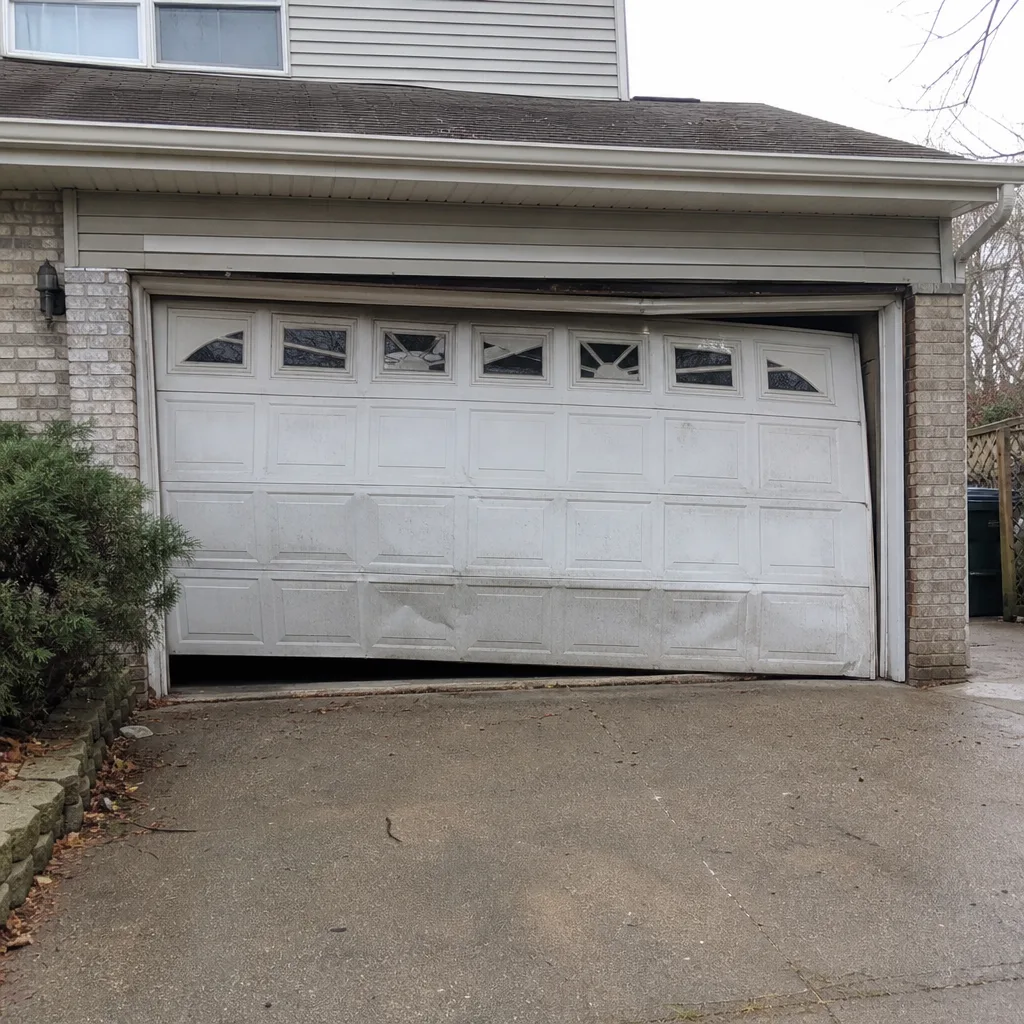 Before
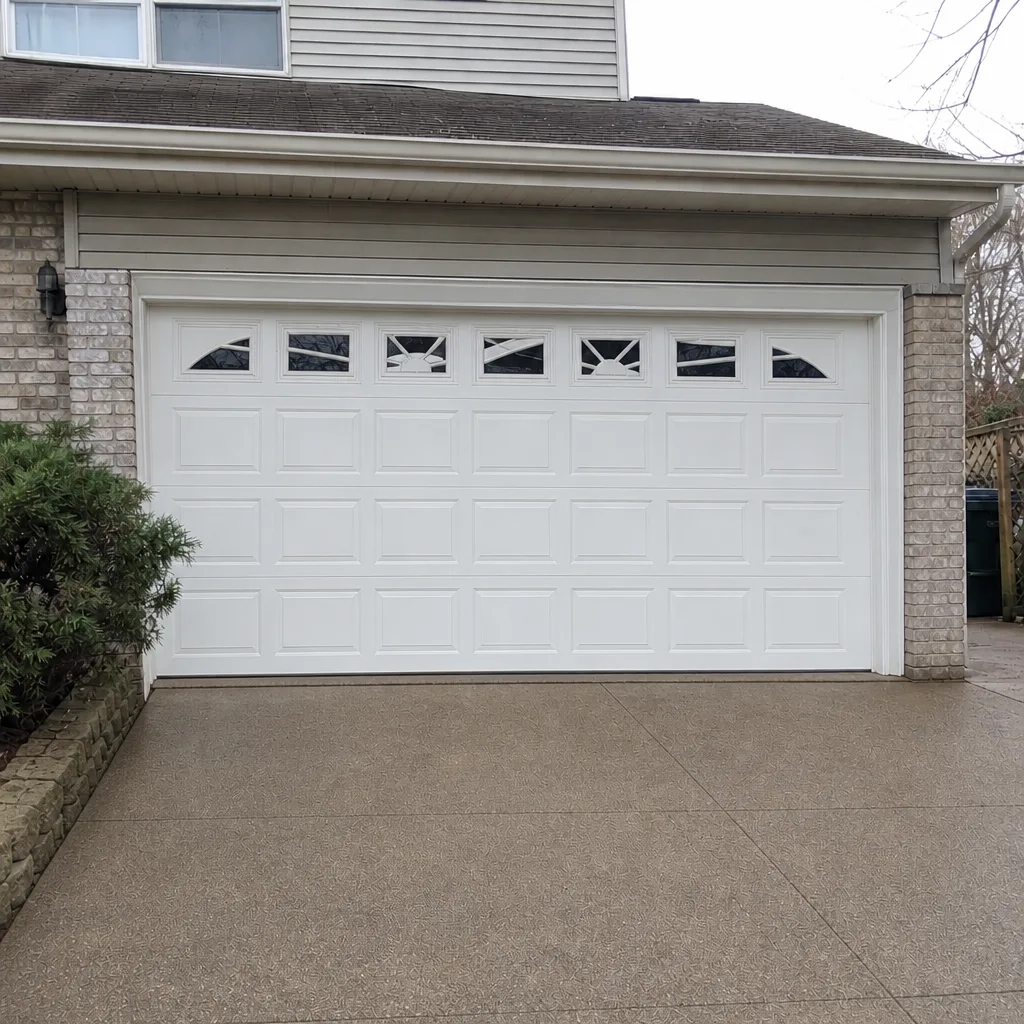 After
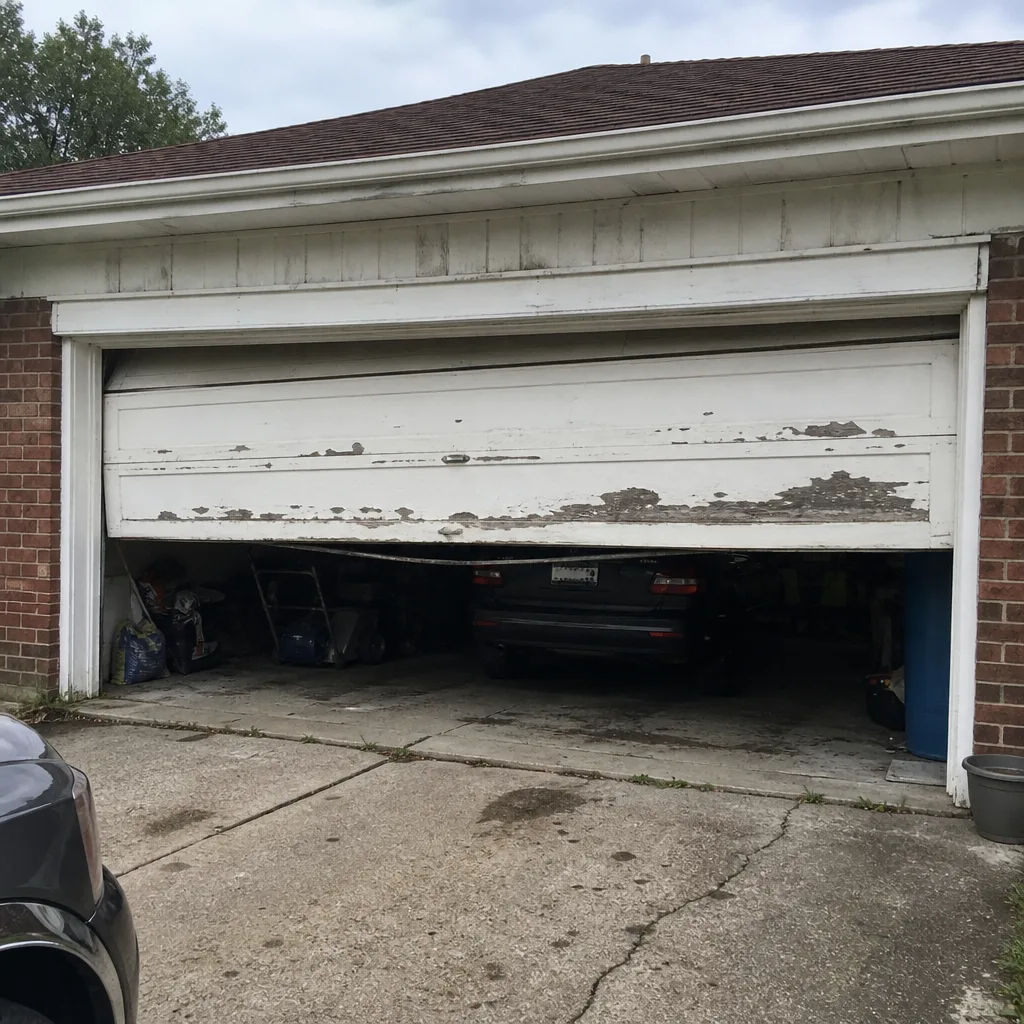 Before
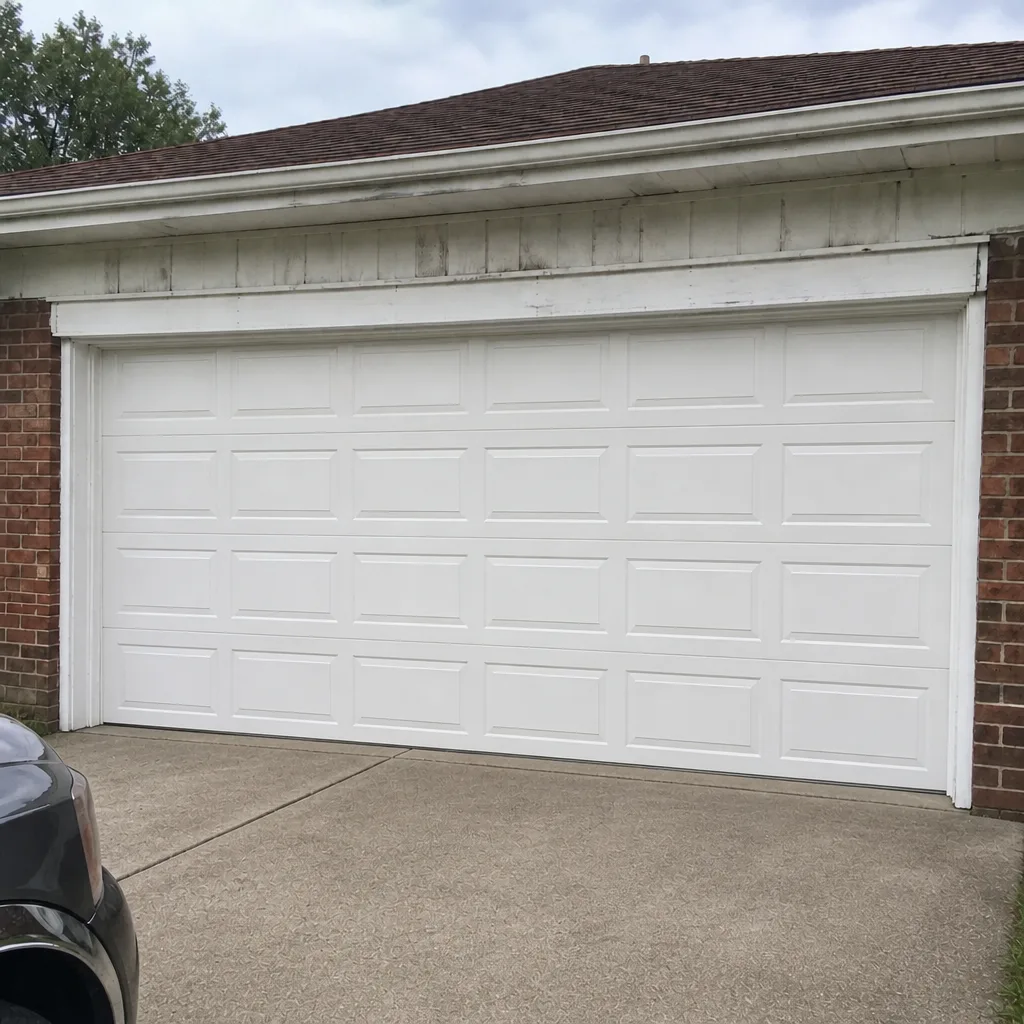 After
When to Call a Professional
Call a professional when the work touches a spring, a cable, a drum, the header bracket, or the structural anchoring of the door’s rails. Call when a door reverses, drops, or hangs mid-travel. Call when the opener is running but the door isn’t moving, or when you’d be changing the opener’s wiring. Call when you’re not sure whether a permit applies, because the city’s answer is faster than guessing. Garage Door Repair Concourse offers free estimates in Concourse: call (844) 542-3280. Our garage door repair team handles the specific system already installed, not a replacement conversation pushed from a single-brand shop. We answer 24/7, with fast dispatch from 7am to 7pm, Sunday through Friday.
For system-wide concerns, including cases where a repair could become an installation, we’d rather be the company you keep. That means working from the brand you own, giving you a straight answer on the fix, and not selling you a door you don’t need. Read more about us on our Garage Door Repair Concourse page.
Frequently Asked Questions
No. Torsion and extension springs store enough energy to cause serious injury, and following a video carefully doesn’t change the physics. Winding bars, spring sizing, and door weight verification are all part of the job, and a mistake releases stored force in an uncontrolled direction. This is safety work, and it belongs with a trained professional. Call (844) 542-3280 for a free estimate.
Yes. Photo-eye alignment is one of the safest DIY garage door tasks. Wipe both lenses, check that each one shows a solid indicator light, and confirm the wiring on both sides is tight. If the lights blink or stay dark after alignment, the sensor may have failed and the wiring needs a technician. Call (844) 542-3280 if you’re stuck.
Sometimes, but only on the small tasks. Weatherstripping, bottom seals, remote programming, and sensor alignment save real money when DIY’d. Springs, cables, opener replacement, and any installation involving permits usually cost more to DIY after wrong parts and repeat trips. Call (844) 542-3280 for an exact quote on the parts that carry risk.
Possibly. A replacement that changes the door’s weight, anchors, or structure is more likely to require a permit than a same-size swap, but the answer depends on the installation. The permit is required whether you do the work or a contractor does it. Ask the city’s building department about your specific address before starting. If you want an installer’s view on what the door needs, call (844) 542-3280.
Usually not. An opener that runs without moving the door often means a broken spring, a snapped cable, or a disengaged trolley. If the door is heavy by hand, the spring is the likely cause, and that’s not DIY work. Call (844) 542-3280 for garage door opener repair before operating the door again.
Look for the pattern: a door that was fine, then had one part replaced, then started reversing, grinding, or hanging mid-travel. Those are the three most common signs that a DIY repair left the door out of balance or misaligned. Loose or mismatched hardware at the brackets is another clue. Call (844) 542-3280 and we’ll sort it out with a straight answer.
Yes, usually. Remote programming depends on the brand and the opener’s head unit, and both Chamberlain and Genie publish the sequence for their models. Identify the exact model first, then follow the manufacturer’s instructions. If the remote won’t pair after several attempts, the logic board may be the issue. Call (844) 542-3280 for a diagnosis.
Often yes. Most older doors in Concourse can be repaired rather than replaced when the panels are solid and the frame is intact. The repair-first approach keeps your door’s existing features, weight class, and brand, and avoids the permit conversation a full replacement may trigger. Call (844) 542-3280 for a free estimate and a straight answer about repair vs. replacement.
The Bottom Line
The DIY vs. professional question comes down to a small set of high-risk tasks and a larger set of low-risk ones. Springs, cables, drums, header bracket bolts, and the door’s structural anchoring are professional work, period. Weatherstripping, bottom seals, sensor alignment, and remote programming are safe for a homeowner with the right parts. The middle ground is where it gets interesting: opener installation, permits, and brand-specific parts are cheap to ask about and expensive to get wrong. In Concourse, the permit requirement and the physics don’t bend to a DIY approach. Everything else can. If you’re near a decision point, call us and ask.
Call (844) 542-3280 for a free estimate. We answer 24/7, with fast dispatch from 7am to 7pm, Sunday through Friday. The price is quoted and agreed before any work starts, so you’ll know the number before a wrench comes out of the bag.
Written by the team at Garage Door Repair Concourse.